
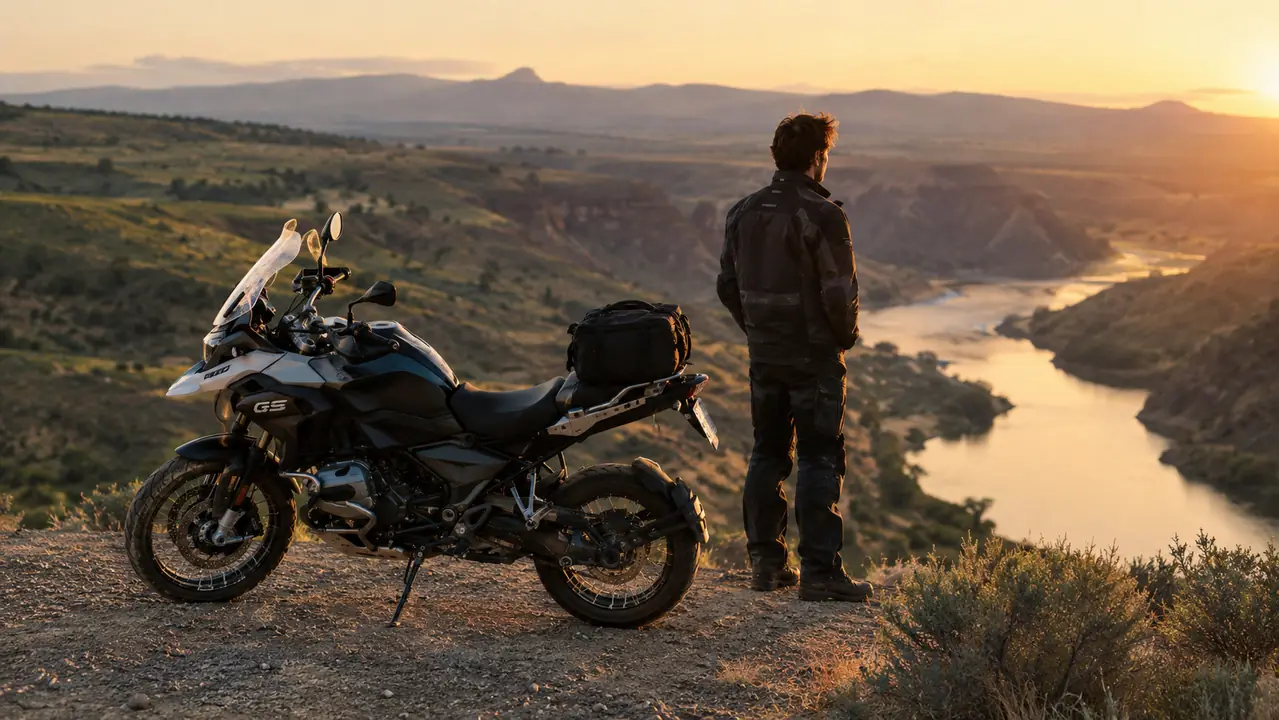
I'll start with what nobody tells you about the Rhinowalk tail bag: the waterproofing is the rain cover, not the bag. Out of the box you get a zippered, soft-sided trunk with a sturdy fabric shell and a zipper that will shrug off a light sprinkle. Then you hit your first real downpour and you learn the rest. The rain cover lives in a pocket on the bottom of the bag, it takes about thirty seconds to put on, and it is the difference between a dry bag and a damp lesson. I have used this bag for four months and something north of 4,000 miles, including one Wyoming storm that came down like a curtain, and the inside has stayed dry every time. That sentence only holds because I used the cover.
I bought it for the summer trip, the one long multi-state ride I take every year. For years I strapped a duffel to the passenger seat with bungee cords, which worked until it didn't, and I got tired of unpacking a wet shirt at a motel in Montana. I wanted something that mounted behind me, left the passenger seat clear for Carol, and could stand up to a full week on the road. This bag checked those boxes on paper. The honest review is about what the paper doesn't tell you.
The Quick Verdict
A useful soft tail bag that has kept my gear dry through 4,000 miles when I use the included rain cover. At 33 liters collapsed and 45 expanded, it covers daily rides and the week-long trip. It is not a hard case, and you should not treat it like one.
Amazon Check Today's Price →The short version: it expands from 33 to 45 liters and has kept my gear dry through 4,000 miles.
Sissy bar straps, rain cover and helmet cover come in the box. Mount it right and use the cover in real weather, and it has handled everything I have thrown at it.
Amazon Check Today's Price on Amazon →How I've Used It
Most of my miles are daily runs into Twin Falls and weekend loops through the canyon roads south of town. On those rides the bag sits collapsed at 33 liters, holding a spare visor, a light jacket, a tire gauge, a small first aid kit, a water bottle and a sandwich. It rides behind me on the sissy bar, strapped to the uprights and the rack underneath, and I barely know it is there until I hit a corner and feel it.
On the long trip, I unzipped the expander panel and the bag went to 45 liters. That is enough for four days of clothes, a dopp kit, a tool roll, a rain suit, and a pair of boots I should have left at home. The bag gets tall when it is expanded, about the height of a cooler, and it changes how the bike feels in a crosswind. You notice it at first, then you stop noticing.
Carol rode pillion for part of the trip. The bag sits behind the rider, so it never touched her seat or her backrest. That was the whole point. On the days she rode with me, the bag carried her things too, and the passenger seat stayed clear.
Waterproofing: What the Label Doesn't Tell You
The product name says waterproof, and here is the nuance. The bag itself is made of a coated fabric with taped seams on the main panels, and the lid overlaps the body. That setup sheds rain on its own for a while. But the main opening is a zipper, and zippers are the weak point on any soft bag. In a hard rain, water will find the zipper line and work its way through, especially where the zipper curves at the corners of the expander panel.
That is why the rain cover matters. It is a fitted cover with an elastic edge and a strap that cinches underneath, and it covers the whole bag including the top zipper. It takes a minute the first few times, then about thirty seconds once you have done it a few times. When it is on, the bag is dry. I have tested that in one Wyoming downpour, one Idaho gullywasher, and more than one cold drizzle that lasted all day.
Two things about the cover. First, it covers the bag, not the straps, and the straps will get wet. That is fine, they dry fast and they do not soak through to the bag. Second, the cover flutters a little at highway speed where it crosses the straps. It is not loud enough to notice with earplugs in, but it is there. Neither one is a reason to skip the bag. They are just things you find out on the road.
The helmet cover in the box is a separate thing. It is a stretchy cover that fits over a full-face helmet, and it is useful when you park in the rain or leave the helmet strapped to the sissy bar while you eat. I have used it a handful of times and it works. It is a small thing, but it is the kind of small thing that makes the bag feel complete.
Four months and 4,000 miles in, including one Wyoming downpour, the inside of this Rhinowalk bag has never once been wet. That sentence is only true because I used the rain cover.
Straps and Mounting: Where the Bag Earns or Loses Trust
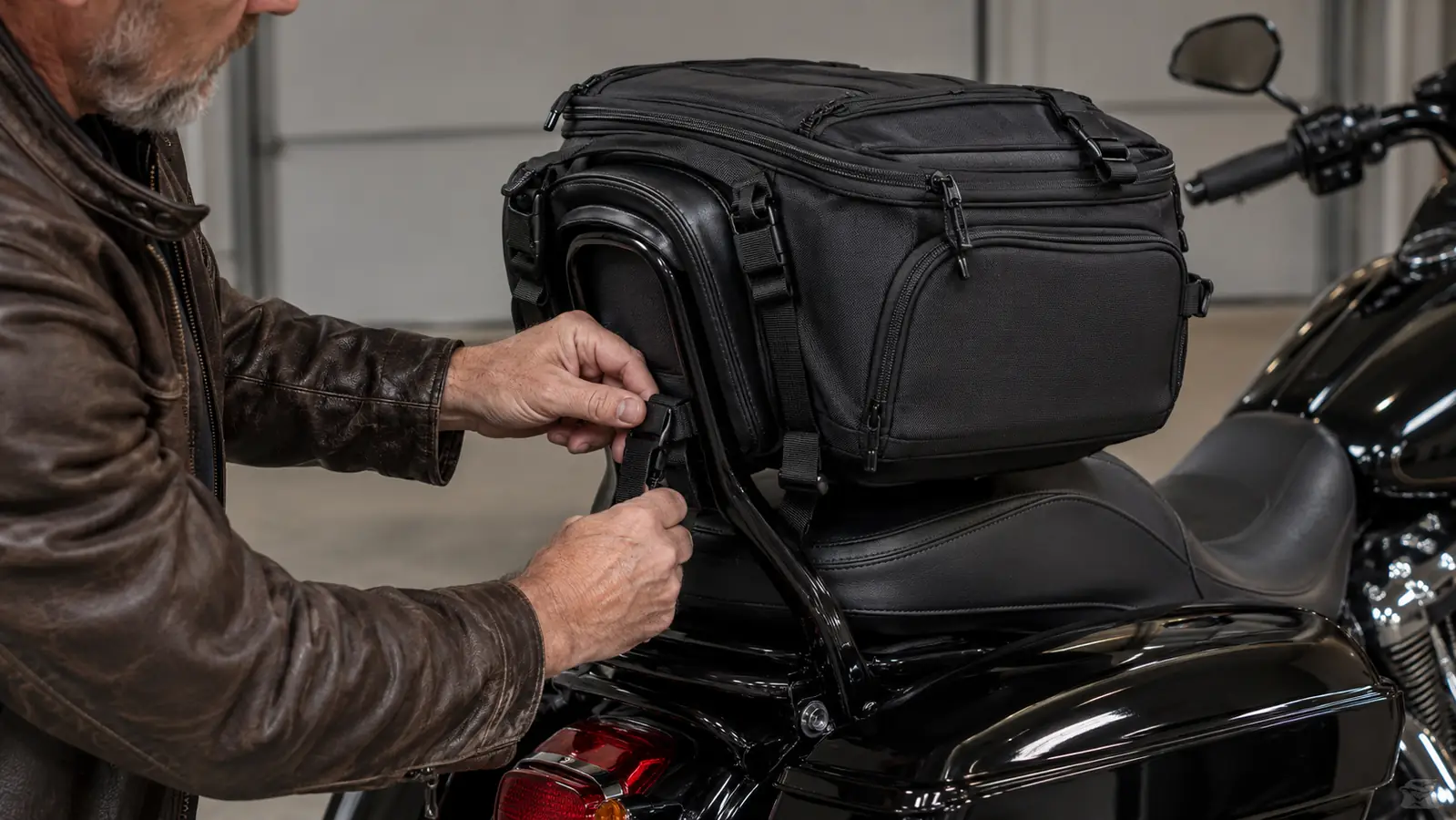
The included straps on the Rhinowalk are the part people argue about in reviews, and I get it. You get four straps total: two long ones that wrap around the sissy bar uprights or the rack, and two shorter ones for the front mounting points. The buckles are plastic quick-release style, and the webbing has a grippy backing meant to hold against painted surfaces.
On my Road King, I run the two long straps around the sissy bar uprights and through the rack underneath, then cinch them down until the bag is solid. The grippy backing helps. The bag does not move when I push on it, and it has not moved in 4,000 miles, including some gravel roads that rattled every bolt on the bike.
Here is what nobody tells you. The straps are long, and when you cinch them tight you end up with a lot of tail. You can tuck the excess under the bag, or fold it and secure it with the Velcro keepers sewn onto the strap ends. If you leave the tails flapping, they will slap against the fender and drive you crazy within the first mile.
The second thing is that the bag only mounts as well as the straps you use. The included straps are fine for a sissy bar and rack setup like mine. If your bike has no sissy bar, no rack, and just a passenger seat, you are down to running the straps under the seat or through the grab handles, and the bag will sit higher and less stable. That is not a fault of the bag. It is a fault of expecting one strap setup to fit every bike.
The Expandable Panel and Fit: 33 to 45 Liters in Real Use
The expander panel is a zippered gusset that runs around the middle of the bag. Collapsed, the bag is a tidy 33 liters, roughly the size of a large backpack, and it looks natural on the bike. Unzipped, it adds a section in the middle and the bag becomes 45 liters, which is a noticeable difference. It stands up straighter and gets taller instead of wider, which is the right way to expand a tail bag because it does not push into your lower back.
Fitting things in is straightforward. The main compartment is one big space with a flat bottom, so it packs like a duffel rather than a suitcase. There are no dividers, so small items need packing cubes or pouches, and I use both. There is a smaller zippered pocket on the top of the lid for things you need without unpacking: phone, wallet, toll money. I have used that pocket constantly.
When the bag is expanded and full, it changes the bike a little. The extra height catches more wind, so you feel it in a crosswind and you notice a small drop in fuel mileage on the interstate. It is not a big deal. But if you are picky about how the bike handles, know that a fully expanded 45 liter bag is more of a presence than a 33 liter bag.
One fit note for touring riders. The bag lines up with the rear fender and sits behind the rider rather than on the passenger seat. That means Carol kept her seat and her backrest on the days she rode with me. On a bike with a short seat, the bag may sit further forward, so measure your mounting space before you buy. The bag is not huge, but it is not small either.
Long-Term Impressions: What Wears, What Holds Up
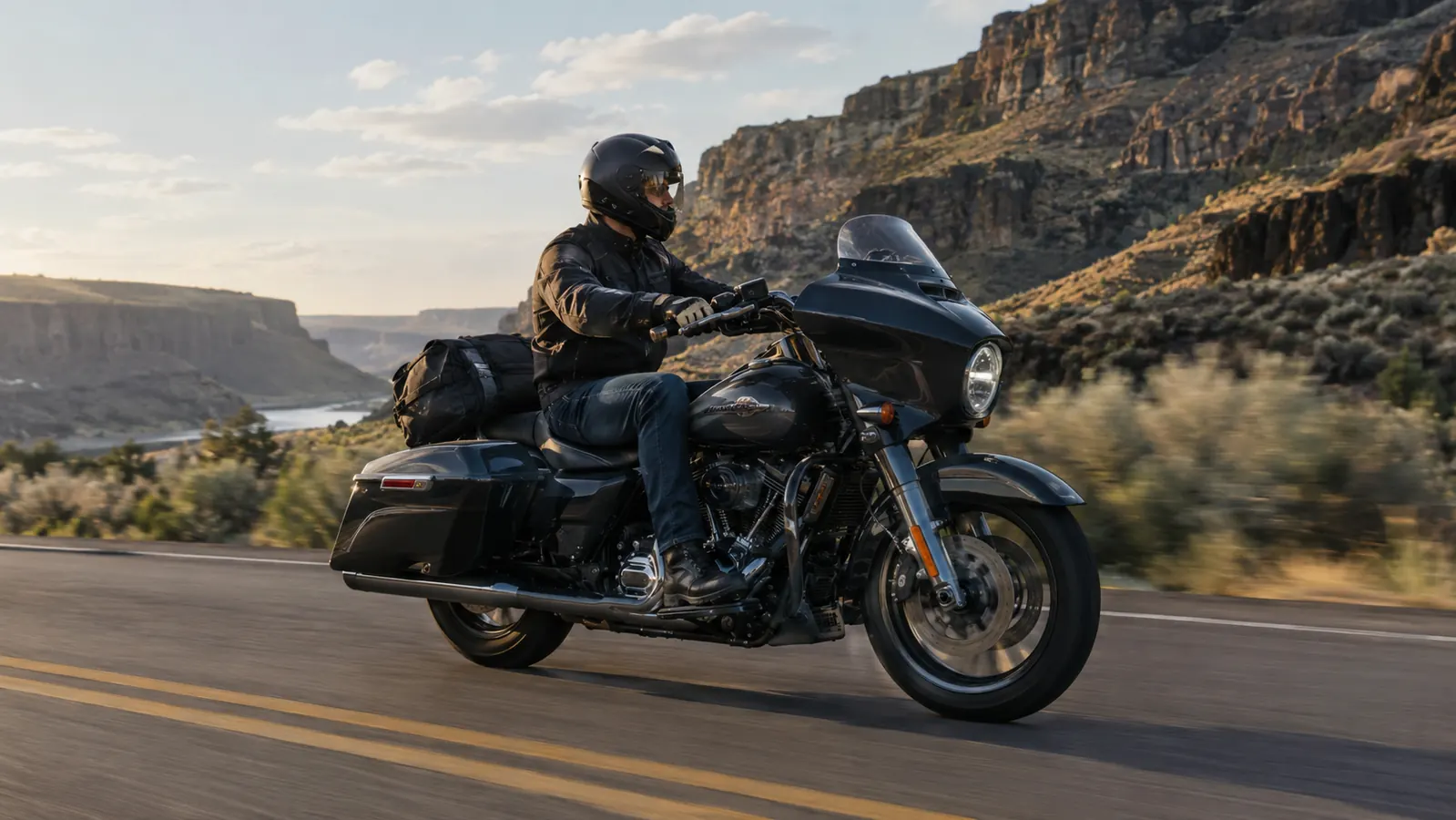
After four months and 4,000 miles, the bag looks used, which is what I want from gear. The fabric shows scuffs on the corners where I have leaned it against walls and posts, but there are no rips, no pulled stitching, and no broken zippers. The main zipper is still smooth, which surprised me, because I expected the expander zipper to be the first thing to go.
The rain cover has held up too. The elastic edge is still snug, the cinch strap still works, and it has not stretched out from being stored in its pocket. The helmet cover is still in one piece, though I have only used it maybe six times.
The base of the bag is stiffer than the sides, which helps it keep its shape when it is not full. That is a small detail that matters on the bike, because a floppy bag wants to fold over and rub the fender. This one does not.
The honest wear list is short. The corner scuffs are the main thing. The straps have faded a little from sun, but the webbing and stitching are solid, and the buckles still click firmly. I would not call the bag indestructible, and I would not toss it down the road. For a soft bag, it has worn better than I expected.
Alternatives I Considered
Before I settled on this bag, I looked at three other options, and the tradeoffs are worth naming because they are the same tradeoffs you will weigh.
Hard luggage was the first alternative. A set of hard panniers or a hard trunk is more secure, fully waterproof, and lockable. The downsides are real: it is a permanent change to the bike, it is heavier, and it costs several times what a soft bag costs. I did not want to commit to hard bags on a bike I use for daily rides into town. For a dedicated touring bike, hard luggage is the better answer. For me, it was overkill.
A roll-top dry bag was the second alternative. It is genuinely waterproof, packs small when empty, and costs less. The problem is that it is a sack. There is no structure, no mounting points, no quick access, and you have to strap it down yourself with your own straps or bungees. I did that for years and I was tired of it.
A smaller tail bag was the third option. There are plenty of 20 to 25 liter bags that weigh less and cost less. But I wanted the expandable panel, because I use the collapsed size daily and the expanded size on the summer trip. Buying two bags to cover both situations costs more than buying one expandable bag.
In the end, the Rhinowalk bag was the right compromise. It is not the best at any single job, but it does the daily job and the trip job with one mounting setup, and it has not let me down. That is the honest summary.
What I Liked
- Genuinely dry inside when you use the included rain cover
- Expandable from 33 to 45 liters, so one bag covers daily rides and long trips
- Strap kit with grippy backing holds solid on a sissy bar and rack setup
- Keeps the passenger seat clear on a touring bike
- Helmet rain cover included in the box
- Held up well over 4,000 miles with no broken zippers or pulled stitching
Where It Falls Short
- The bag itself is water-resistant, not waterproof, without the cover
- Long strap tails need to be tucked or secured or they will slap the fender
- Expanded and full, it catches more wind and you feel it in crosswinds
- No internal dividers, so small items need packing cubes or pouches
- Corner scuffs show wear quickly
- Not lockable, so do not leave anything valuable in it
Who This Is For
This bag is for the rider who wants one piece of luggage that does the daily commute and the week-long trip without a garage full of bags. It is for the rider who mounts luggage behind the seat, keeps the passenger seat clear, and does not mind spending thirty seconds putting on a rain cover when the sky opens up. It is for the rider who understands that a soft bag is not a hard case and packs accordingly: clothes, tools, gear, nothing you would be heartbroken to lose.
Who Should Skip It
Skip it if you need lockable, fully waterproof luggage for a cross-country trip in the worst weather. Skip it if your bike has no sissy bar, no rack, and no solid mounting point, because the bag will sit higher and less stable on a bare seat. Skip it if you want to toss a bag on and go without reading how the straps route, because this bag rewards a few minutes of setup. And skip it if you regularly carry a laptop or anything you cannot afford to get wet, because the cover is excellent but it is not a hard shell.
If you ride with a sissy bar and you want one bag for daily rides and the summer trip, this is the one I keep reaching for.
Expandable from 33 to 45 liters, with sissy bar straps, a rain cover and a helmet cover in the box. Mount it right, use the cover in real weather, and it has handled everything I have thrown at it in 4,000 miles.
Amazon Check Today's Price on Amazon →