
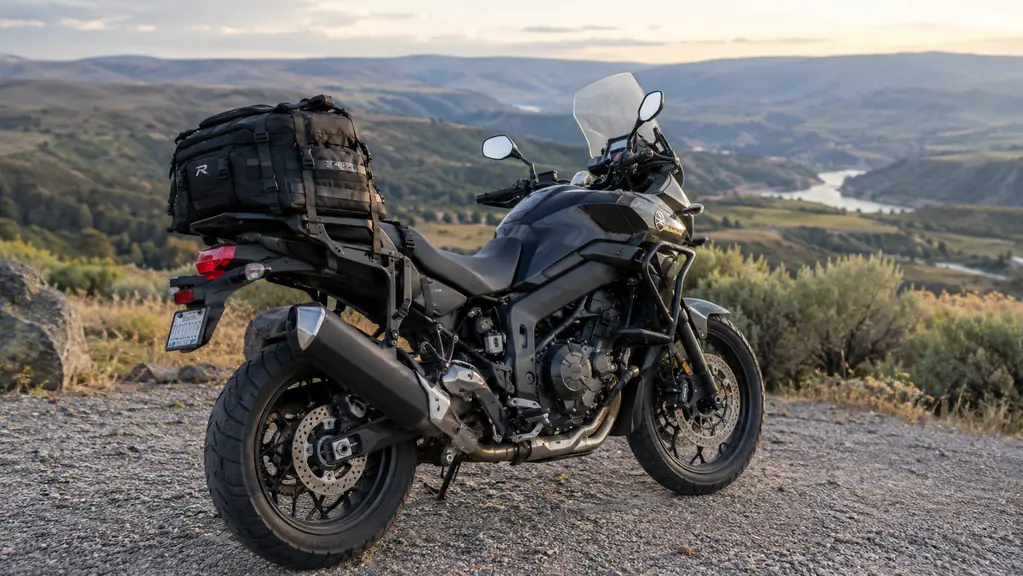
There are two ways to carry gear on a long motorcycle trip, and they are not the same thing. Hard luggage locks shut and shrugs off weather. A soft tail bag like the Rhinowalk expands to swallow whatever you forgot and costs a fraction of what a pair of hard cases runs. I have used both on the same bike, the same roads, and the same kind of ten-day summer loops through southern Idaho, Montana and Wyoming, and I keep coming back to the Rhinowalk for most of my riding.
This comparison is between the Rhinowalk Motorcycle Tail Bag, the expandable 33 to 45 liter soft bag, and a generic hard saddlebag and top case setup. The short answer: for a rider who uses one bike for everything, the Rhinowalk is the better buy. For a dedicated tourer that stays loaded and parks in the open, hard luggage earns its keep. Here is why, and here is who should buy which.
What You Are Really Choosing
The choice is not really soft versus hard. It is flexibility versus permanence. The Rhinowalk is a bag you put on the bike when you need it and take off when you do not. Hard luggage is a system you bolt on once and live with. One is a tool you grab from the garage. The other is a modification to the motorcycle itself.
There is a middle option, which is a soft bag that you treat like permanent luggage. Some riders strap a tail bag on in April and leave it until October. The Rhinowalk will do that, and the straps and zippers are built well enough to survive a season of use. But if you are going to leave it on anyway, the security advantage of hard cases starts to matter, because a bag that sits on the bike in a parking lot all day is a bag that gets noticed.
That distinction matters more than the material. A rider who tours twice a summer and commutes the rest of the year wants the bag. A rider who points the bike at the horizon in May and does not come home until September wants the cases. I have been both riders, and I have owned both setups.
How I Ran This Comparison
I compared these the slow way, with miles. The Rhinowalk has been on my 2017 Road King for two long trips, one through the Bitterroot Valley and one down through Nevada and back, plus a full season of weekend canyon loops. The hard luggage I am measuring it against is a set of locking hard bags I ran for two summers before that. Same bike, same routes, same packing habits. That is the only honest way to compare luggage, because a bag that works on a Sunday ride can fall apart on day four of a trip.
I should also say what I did not do. I did not load both at once, and I did not weigh every item. I packed the way I normally pack: clothes for four or five days, a rain suit, a small tool roll, and whatever else got thrown in at the last minute. That is the real test for most riders, because most of us do not pack like we are crossing the Sahara.
The trips themselves were ordinary touring. Two-lane highways, small towns, one hotel stay and a few nights camping. Rain on two of the days, wind on most of them, and temperatures from the high forties in the mountains to the mid nineties in the desert. That range is exactly what luggage has to survive if you ride in the West.
For the Rhinowalk trips, I packed the bag the way it is meant to be packed. The main compartment took the bulk of the load, the expansion panel added room when I needed it, and the straps held everything down without loosening over a day of riding. I checked the strap tension at fuel stops, and I never had to retighten them. That is not true of every soft bag I have owned.
| Rhinowalk Tail Bag | Hard Luggage | |
|---|---|---|
| Price | A fraction of the cost of a hard set, no extra hardware | Several times more, plus mounting brackets |
| Weight when empty | A few pounds, does not change the bike's handling | Heavy shells you carry even when empty |
| Mounting | Included straps, no tools, moves between bikes in minutes | Brackets and a permanent or semi-permanent fit |
| Capacity | Expands from 33 to 45 liters, soft sides forgive odd shapes | Fixed shape and fixed volume |
| Weather protection | Waterproof shell, seams and an included helmet rain cover | Watertight when new, but latches and gaskets age |
| Security | Straps and zippers, a knife gets in fast | Locks shut, the strongest deterrent |
| Best for | Riders who want one bag for every trip | Riders who leave the bike loaded and parked outside |
Where the Rhinowalk Wins
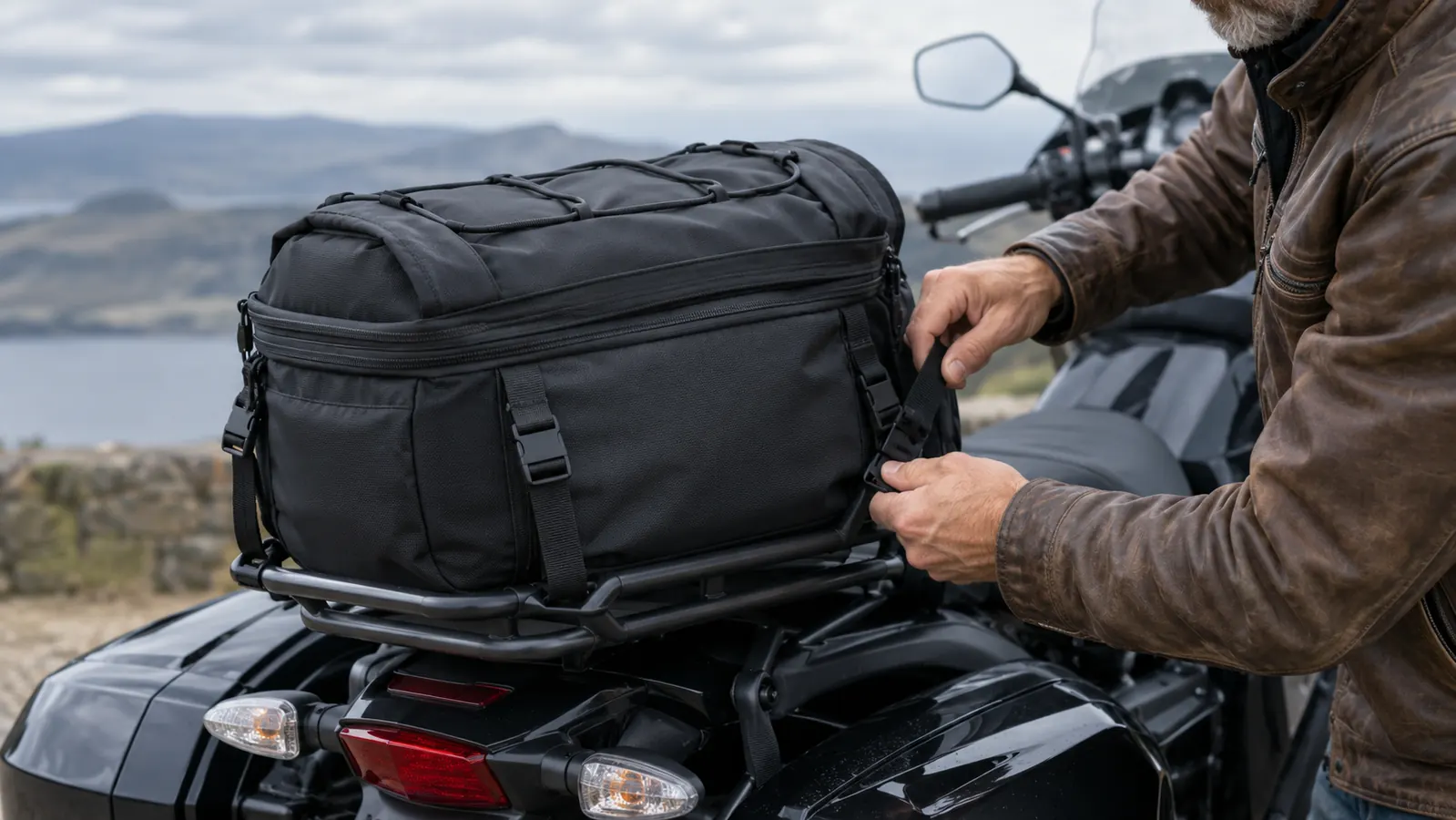
The first thing you notice is the cost. The Rhinowalk costs a fraction of what a hard set runs, and it does not require mounting hardware, brackets, or a new rack. My Road King already had a luggage rack, so the bag went on with the included straps in about two minutes. Hard luggage meant ordering brackets, spending an afternoon with a wrench, and living with the result whether I liked it or not. For a rider who does not want to turn the bike into a project, that difference is huge.
The expandable zipper is the feature I did not expect to care about. At 33 liters the bag sits low and narrow, which keeps the bike looking like a motorcycle. Unzip the expansion panel and it jumps to 45 liters, which is the difference between strapping the tent to the seat and having it inside the bag. On the last trip I fit four days of clothes, a rain suit, tools, and a helmet in it, with room left for a sack of groceries. The helmet went inside the included rain cover, which is a detail hard cases do not give you.
The straps are the other win. Hard luggage mounts once and stays, which is fine if you never take it off. The Rhinowalk goes on in about two minutes and comes off in less. My bike spends most of the year as a daily rider into town, so I do not want a top case bolted to it every day. The Rhinowalk lives in the garage and only goes on the bike when I need it. That matters more than you think, because a bike with permanent luggage is a bike you think twice about taking for a quick ride after work.
One more thing about the straps: they do not mar the bike. Hard luggage brackets bolt to the frame and can rub paint over time, especially if the bike vibrates. The Rhinowalk straps sit on the seat and the rack, and after two seasons I have no marks on the fender or the side covers. For a rider who cares about the bike's finish, that is worth something.
It also handles better than I expected at speed. A soft bag weighs less than hard cases, and because it sits low on the rack it does not shift the center of gravity much. On the interstate at seventy-five, with the bag expanded to 45 liters, the bike tracked straight and I never once felt the rear end wander. I have felt hard cases do that on bikes that were not set up for them.
The included helmet rain cover is a small thing that turned out to be genuinely useful. On a hard luggage bike, a wet helmet is a fact of life unless you carry it inside or buy a separate cover. With the Rhinowalk, the cover lives in a pocket and goes over the helmet when it is strapped to the bag. It is not a reason to buy the bag by itself, but it is the kind of detail that makes you reach for it instead of the hard cases.
Where Hard Luggage Wins
I will not pretend hard luggage does not have a place, because it does. Security is the big one. A locked hard case is not proof against a determined thief, but it stops the grab-and-go crowd. If I am parking overnight in a city and the bike has to sit loaded, I want the hard bags. The Rhinowalk has zippers and straps. The zippers have held up well, but any soft bag is only as secure as the person who decides not to cut it.
Hard luggage also wins when you never take it off. If your bike is a dedicated tourer and you want to walk out to the garage and have it always ready, a set of hard cases is genuinely less hassle than strapping a bag on every time. The trade is that you pay for that convenience with money, weight, and a bike that carries its luggage everywhere, even when the luggage is empty. On a long day in the mountains, that extra weight is something you feel.
Weather is closer than people expect. The Rhinowalk is waterproof, and I have ridden through a full day of rain in Wyoming without anything inside getting wet. Hard cases are watertight when new, but latches and gaskets age, and a hard case that leaks is harder to fix than a soft bag you can patch. I would call that one a tie, with a slight edge to the Rhinowalk for the included helmet rain cover.
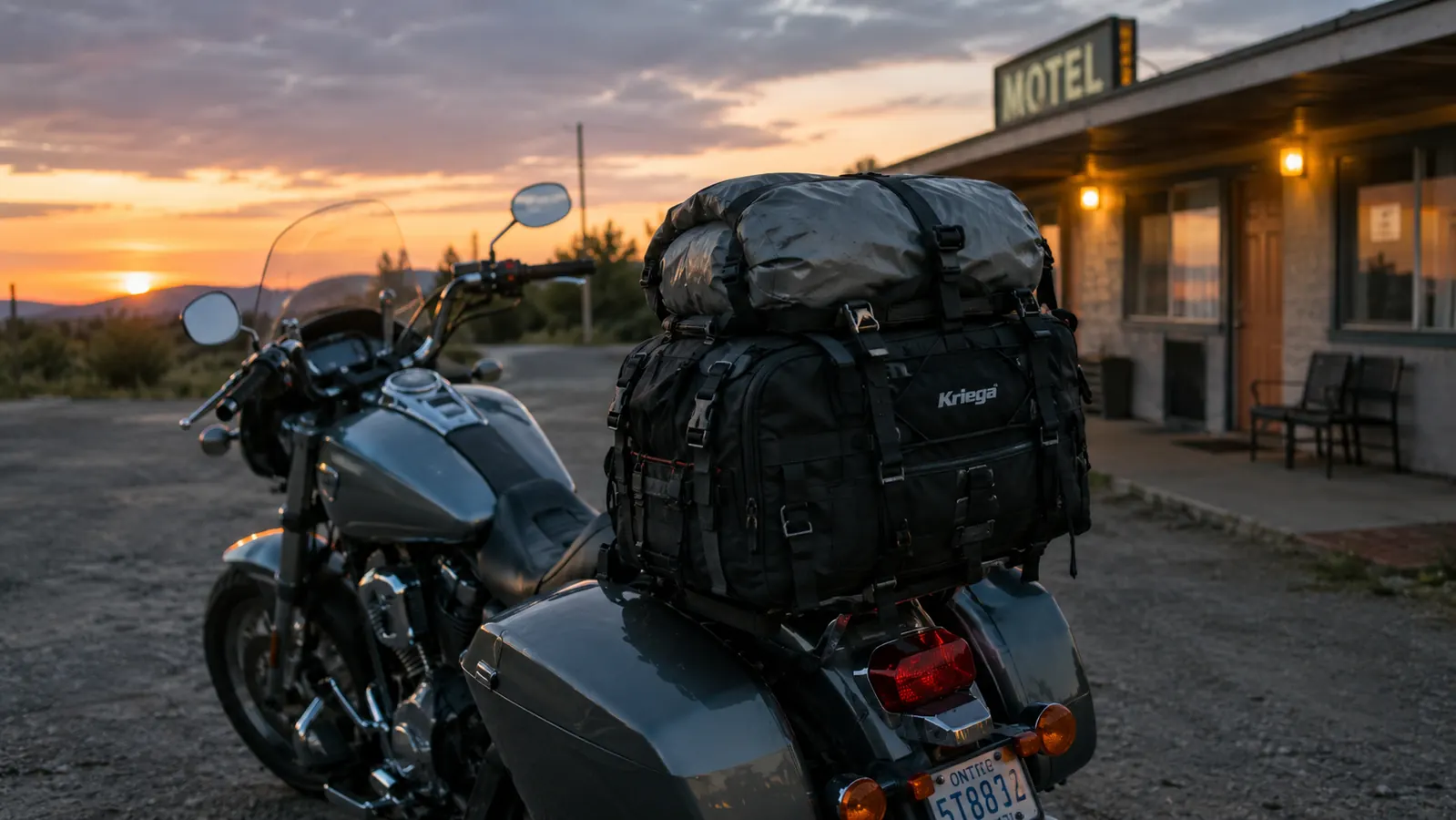
There is also the matter of leaving the bike loaded. On the last morning of a trip, with hard luggage, I could check out of the motel, lock the bags, and go eat breakfast without hauling everything into the restaurant. With the Rhinowalk, I either took the bag inside or left it on the bike and worried. That convenience is real, and it is the main reason I still recommend hard cases to some riders.
Weight is the price you pay. Hard cases add pounds that stay on the bike whether you are touring or just running into town. On a heavy touring bike like mine, the difference is not dangerous, but it is there, especially when the tank is full and the bags are loaded. The Rhinowalk adds almost nothing when it is empty, because it is not on the bike at all.
The expandable tail bag that has done two long trips and still looks new
If you want soft luggage that mounts in minutes, expands from 33 to 45 liters, and shrugs off a full day of rain, this is the one I keep coming back to.
Amazon Check Today's Price on Amazon →Who Should Buy Which
Buy the Rhinowalk tail bag if you ride the same bike for everything and do not want luggage bolted on all year. Buy it if you want to move your luggage between bikes, if you pack loose and want to stuff in one more layer, or if the cost of a hard set makes no sense for two trips a summer. It is also the better pick if you park in a garage or a locked yard and only need the bag to survive weather, not thieves.
Buy hard luggage if your bike is a dedicated tourer that stays loaded, if you regularly park overnight in places where a knife is a real risk, or if you simply do not want to strap anything on before a ride. The Rhinowalk will not lock, and if that thought bothers you, you have your answer. Neither option is wrong. They are answers to different questions.
If I had to pick one setup for the rest of my riding life, I would take the Rhinowalk and not feel like I gave anything up. It costs less, mounts in minutes, expands when I need it, and keeps my bike looking like a motorcycle. The hard cases stay in my memory as the right tool for a different kind of rider. That rider is not me, and if you are reading this because you are trying to decide, you now know which one you are.
For most of my riding, the Rhinowalk is the bag that goes on the bike
Two long trips, a season of weekend loops, and it still sheds rain and straps down tight. If that sounds like your kind of touring, it is worth a look.
Amazon Check Today's Price on Amazon →