
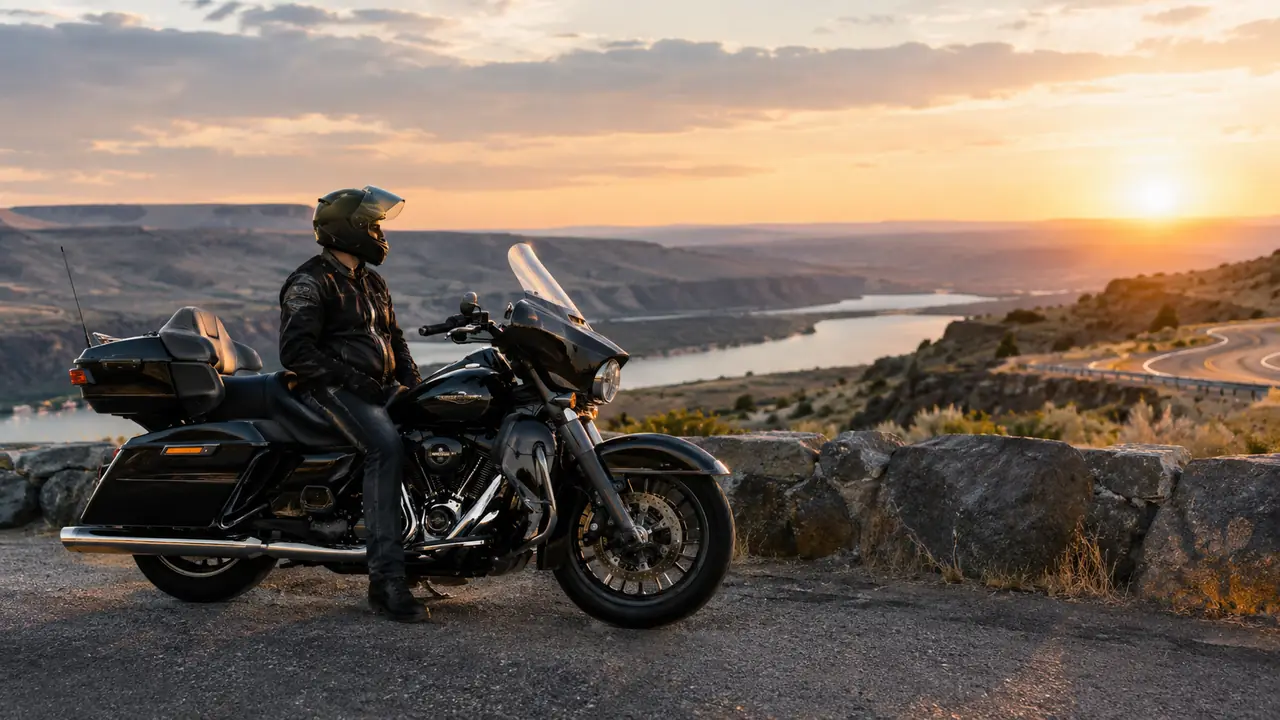
I have a rule about gear: it earns its spot on the bike or it gets sold. The Cardo Spirit has spent a full riding season on my 2017 Road King, through morning commutes into Twin Falls, weekend loops on the canyon roads, and one long trip down through Nevada and back. I put the unit on my helmet in April and have not taken it off since, which is about the strongest thing I can say for it. It has done what I needed it to do, and a couple of things I did not expect.
If you are shopping for a helmet communicator, you have probably noticed there are two ways to go. You can spend serious money on a mesh system with all the group features, or you can grab a cheap Bluetooth headset and hope it survives the season. The Cardo Spirit sits between those two, and after thousands of miles I can tell you exactly where it earns its place and where it comes up short.
The Quick Verdict
A solid, dependable Bluetooth communicator for solo riders and two-up trips. The Spirit nails the basics: clear audio at speed, simple pairing, a battery that lasts, and buttons you can operate with gloves on. It is not a mesh intercom, and if you ride in a big group every weekend you will want more. For the rest of us, this is the one.
Amazon Check Today's Price →The Cardo Spirit handled a full season of highway miles without a complaint
If you ride alone or with one passenger and you are tired of shouting into the wind, this is the communicator I would buy again. Check today's price on Amazon and see if it fits your riding.
Amazon Check Today's Price on Amazon →How I've Used It
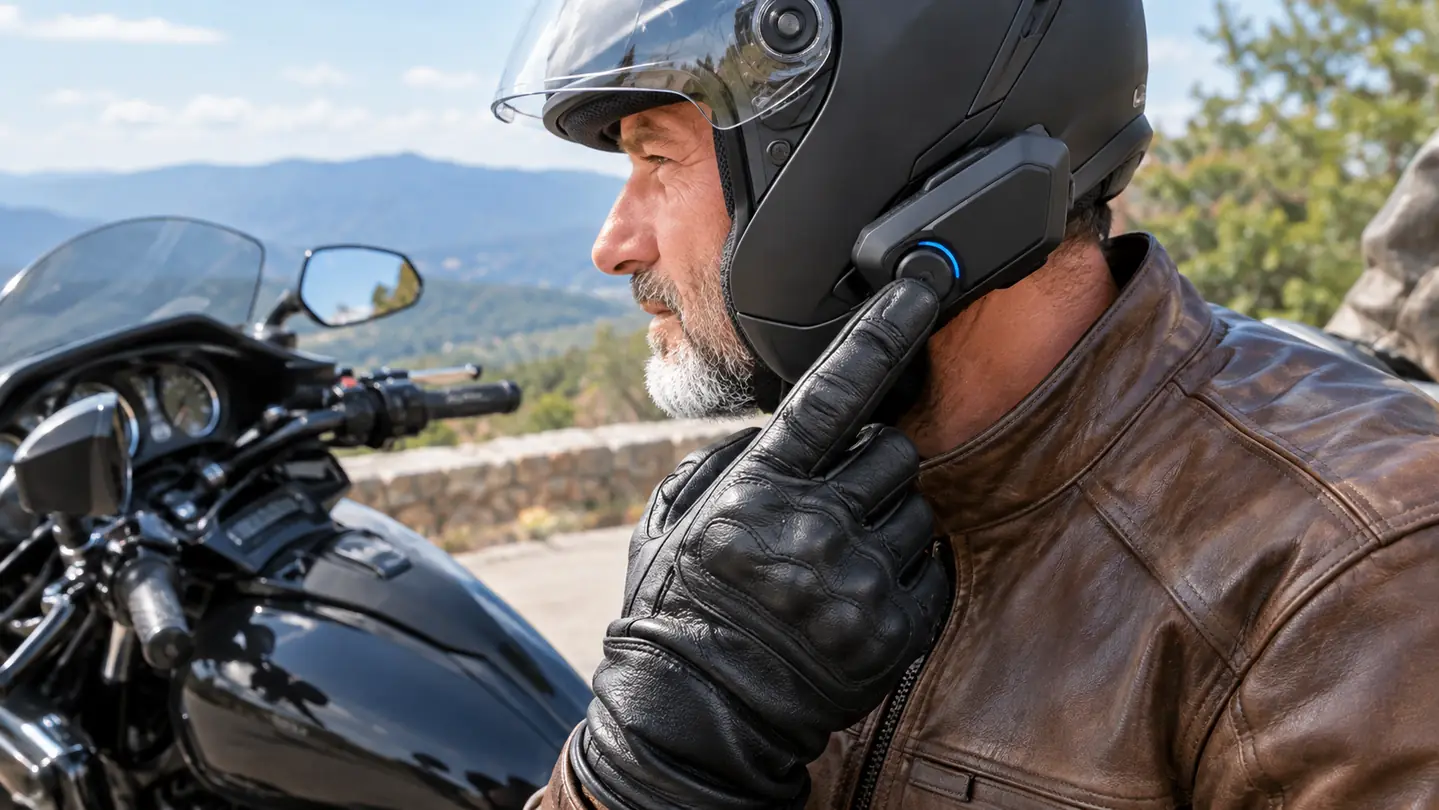
The setup is about as simple as it gets. The Cardo Spirit clamps onto the left side of my helmet shell, and the speakers sit on the inner pads with adhesive. It took me maybe twenty minutes to install, and most of that was me being careful with the speaker placement so they lined up with my ears. The clamp is solid, and once it was on I forgot it was there.
My typical week is about 200 miles: daily runs into town, a longer loop on Saturday morning, and whatever errands Carol and I need to run. On the long Nevada trip I had the unit on for nine or ten hours a day, mostly for music and navigation prompts, and it never ran out of battery before I did. I charged it overnight out of habit, but I never once saw the low battery warning on a ride that mattered. One Saturday in late June I ran the loop down through the Snake River canyon and back, about 140 miles, with directions going the whole way because I was trying a route I did not know. The prompts came through every turn, even the tight switchbacks where I was leaned over and the wind was buffeting. I had the volume set once and never touched it again. That is the kind of day that makes you stop thinking about the gear and just ride, which is exactly what a communicator should do.
I paired it with my phone once at the kitchen table and it has reconnected every time I put the helmet on since. That sounds like a small thing, but I have owned headsets that needed a ten-minute argument every morning. The Cardo just works, and that consistency is worth a lot when you are already running late.
Audio Quality at Speed
Here is the honest part: no helmet speaker sounds like your living room stereo, and the Cardo Spirit is not trying to pretend otherwise. What it does is give you clear, usable audio at highway speeds. I run my Road King at 75 to 80 mph on the interstate, and I could hear music and spoken directions without cranking the volume to max. The 32mm speakers are thin enough to fit inside my helmet without pressure points, which matters on a ten-hour day.
Phone calls are where I was most skeptical. I took a call from my sister while rolling through Idaho on a windy afternoon, and she said I sounded like I was in a truck, not on a motorcycle. The microphone does a genuinely good job of pulling your voice out of the wind. I have used headsets where the other person spends the whole call saying 'what?' and I did not get that once with the Cardo. The one call that really sold me was with my brother-in-law, who is hard of hearing and usually struggles on any speakerphone. I was doing about 70 on a two-lane with a crosswind, and he understood every word without asking me to repeat myself. That has never happened with any other headset I have owned. I have also left the unit on while I was standing at a fuel pump with the engine running, and the person on the other end could not tell I had moved off the bike. The noise filtering is doing real work, not just marketing work.
The microphone does a genuinely good job of pulling your voice out of the wind. I have used headsets where the other person spends the whole call saying 'what?' and I did not get that once with the Cardo.
The wind noise at speed is still there, because physics. The speakers have to compete with a hundred miles an hour of air, and no consumer headset fully wins that fight. But the Cardo gets closer than anything I have tried at this price, and the automatic volume adjustment actually helps. When I slowed down for a fuel stop, the music got quieter on its own. When I got back on the highway, it came back up. I did not have to touch a button.
Controls, Pairing, and the Things That Annoy
The buttons are physical, which is exactly what I want on a motorcycle. I can find the main wheel by feel with heavy gloves on, and the click is positive enough that I know I pressed it without looking. The volume wheel on the side is easy to spin, and the music controls are intuitive enough that Carol figured them out on her first ride without an instruction manual.
Pairing a second phone or a GPS unit is straightforward, and the Cardo app walks you through it if you want to use it. I will say the app is not the most polished piece of software I have ever used, and I mostly ignore it. The unit works fine as a standalone Bluetooth device, and that is how I have run it for most of the season.
What annoys me? The voice prompts are a little quiet compared to the music, so I occasionally missed a notification. The USB-C charging port is hidden under a small rubber flap, which is fine for keeping rain out but a little fiddly when you are trying to charge it in a hotel room at midnight. And there is no FM radio in the Spirit, which I did not think I would care about until I was in a dead zone with no cell service. Those are small complaints, but they are real ones. The one time the quiet prompts actually cost me was on the Nevada trip, when I missed a low-fuel warning from my tank app because the music came back up right as the prompt played. I made the next exit anyway, but I had to do the mental math on the fuel gauge the rest of the way. I also found that the volume wheel is easy to bump when you put the helmet on, so I have started the engine a few times with the music at full blast. It is a small thing, and the auto volume settles it down once you are moving, but it is worth knowing before your first ride.
Weather and the Long Haul
The Cardo Spirit is rated waterproof, and I can vouch for it. I got caught in a proper Idaho thunderstorm on the way back from Nevada, rain heavy enough that I pulled over twice to wipe my visor. The unit was on the whole time, and it never missed a beat. No crackling, no dropout, no water finding its way into the speakers. That alone puts it ahead of every budget headset I have owned.
Battery life is the other long-haul concern, and the Spirit is honest about it. Cardo claims thirteen hours, and my experience is that you get close to that with music at moderate volume. On my longest day, a twelve-hour push from Reno back toward Twin Falls, I had it on the charger that night with about a quarter of the battery left. If you are doing Iron Butt distances every weekend, you will want the step-up model with the bigger battery. For a normal long day in the saddle, this is enough.
Riding Two-Up with Carol
This is where the Cardo Spirit surprised me. Carol rides pillion on a lot of our weekend trips, and we have spent years doing the tap-on-the-shoulder communication method. The Spirit is a two-way intercom, not a mesh system, so we can pair the two units together and actually talk at speed. It is not a conference call with five bikes, but it was never meant to be.
We used it on a three-day loop through the Sawtooth country, and it changed the trip in a way I did not expect. Carol could tell me when she needed to stop, I could point out a hawk on a fence post, and we could just talk like normal people instead of shouting. The two-way range is listed at about four tenths of a mile, and in practice it held up well on the open road. In town, with buildings around, it dropped out a few times, but it always reconnected when we got back into the clear. The moment it really earned its keep was the second morning, when a cold front blew in and Carol could tell me her hands were going numb before it became a problem. We pulled off, she warmed up, and we were back on the road in ten minutes. On the old system, she would have waited another hour before tapping my shoulder, and we would have finished the day with her miserable. That alone justified the two units, and we have used it the same way on every trip since.
If you ride in a group of three or more, the Spirit is not the tool for you. It does one connection, rider to passenger, and that is its ceiling. The premium mesh units in the Cardo lineup do group riding properly, and the Spirit does not pretend to. Know what you are buying and you will not be disappointed.
What I Liked
- Clear audio at highway speeds with the thin 32mm speakers
- Wind-resistant microphone that callers actually understand
- Genuinely waterproof, proven in a heavy rainstorm
- Simple physical buttons that work with winter gloves
- Solid 12-plus hour battery life for a full day of riding
- Reliable auto-reconnect with my phone every single time
Where It Falls Short
- No mesh intercom, so group rides are out
- No FM radio, which I missed in a cell dead zone
- Voice prompts are quieter than the music
- The two-way intercom drops out in town with buildings around
- Charging port flap is fiddly in a dark hotel room
Who This Is For
The Cardo Spirit is for the rider who wants dependable Bluetooth without paying for features they will never use. If you ride alone most of the time and want music, directions, and the occasional phone call, this is the one. If you ride two-up and want to actually talk to your passenger, the two-way intercom is worth it by itself. It is also a great first communicator for a newer rider, because the installation is simple and the controls are forgiving.
Still on the fence? Put one on your helmet and ride a familiar road
A season of miles taught me the Cardo Spirit is the rare piece of gear that just works. If that sounds like your kind of ride, check today's price on Amazon.
Amazon Check Today's Price on Amazon →Who Should Skip It
Skip the Cardo Spirit if you lead group rides every weekend. The single two-way connection means you cannot link up four or five bikes, and you will be frustrated the first time the group chat passes you by. Skip it if you are an audiophile who expects rich, full-range sound; these are helmet speakers, and they are good for what they are, not for critical listening. And skip it if you do marathon 1,000-mile days on a regular basis, because the battery that serves me well for a normal day will run out before you do.
For everyone else, the Cardo Spirit is the honest middle ground: not the cheapest, not the fanciest, but the one that does the job day after day. I have put a season of real miles on mine, and I will put another season on it this spring. That is about the best recommendation I can give any piece of riding gear.