

I have been riding for about 30 years, and for most of that time I treated riding gloves the way I treated a pair of work gloves. Grab whatever was on the shelf, ride until the seams let go, buy another pair. It took a low-speed slide on a gravel shoulder a few years back to make me think harder about what is actually between my hands and the pavement when things go wrong. Since then I have tested gear the way a practical person does, by putting real miles on it. This past season I ran the COMMUTER leather gloves head to head against a solid pair of textile riding gloves on the same bike, the same canyon roads, and the same morning commutes, and I kept notes the whole way.
The short answer is that most everyday riders should own both, but they should buy the leather pair first. Leather gives you the abrasion resistance and the direct feel at the controls that matter when you need to brake hard or when you go down. Textile gloves give you waterproofing, insulation, and machine-washable convenience, which matters on a wet Tuesday but does nothing for you on a dry Sunday when you are leaning into a corner. I ride a 2017 touring bike with about 60,000 miles on it, daily trips into town, weekend loops through southern Idaho canyon roads, and one long trip every summer. I put all of that into this comparison.
What I Compared and Why
The two gloves in this comparison are not really rivals. They are answers to two different questions. The COMMUTER leather gloves answer the question of what to wear when you want maximum protection and the most natural feel at the controls. The textile gloves answer the question of what to wear when the weather is working against you and you want to stay dry and warm without thinking about it. A lot of riders ask which one is better, and the honest answer is that it depends on when and where you ride. So I set out to define the line clearly.
I picked the COMMUTER gloves because they are a no-frills leather glove that a rider buys expecting it to last. No gimmicks, no branding plastered everywhere, just leather, reinforcement where you need it, and a fit that does not fight your hand. The textile gloves I tested are a comparable mid-range pair with a waterproof membrane and light insulation, the kind you see at any motorcycle dealer. I wanted the comparison to be fair, so both pairs were new, both were broken in properly, and both got the same rides.
| COMMUTER Leather Gloves | Textile Riding Gloves | |
|---|---|---|
| Abrasion resistance | Full-grain leather stands up to a slide and keeps its structure | Textile weave is good for a season or two, but a hard slide can wear through to the liner |
| Rain and wet weather | Soaks through after about 20 minutes of steady rain | Waterproof membrane keeps your hands dry in a downpour |
| Cold mornings | Unlined leather lets the wind cut through below about 45 degrees | Insulated lining holds heat and works well with heated grips |
| Feel at the controls | Thin palm and snug fit let you feel the grip and the brake lever directly | Extra padding and waterproof layers add bulk between you and the controls |
| Break-in | Needs a couple of weeks of regular rides to soften up | Comfortable from the first ride |
| Durability | Years of daily use, and leather gets better with conditioning | Seams and fabric wear out faster, expect a shorter life |
| Care | Needs leather conditioner and careful drying | Toss them in the washing machine and hang them up |
| Best for | Dry everyday riding where protection and feel come first | Wet, cold commutes where staying dry matters more than feel |
How I Tested Them
I ran both pairs through the same routine for a full season. That means daily rides into Twin Falls, the two-lane canyon roads east of town on weekends, and one multi-state trip in June where I put about 1,200 miles on in five days. My wife Carol rode pillion for part of the weekend loops, and she noticed things I did not, like how much thicker the textile gloves felt when she grabbed my shoulder at stops. I also did the boring stuff. I rode in steady rain. I rode on a 38-degree morning. I left both pairs in the saddlebag overnight to see how they behaved when they were cold and stiff.
I am not a lab, and I am not going to pretend otherwise. I did not drag a test arm across asphalt at speed, and I would not trust anyone who claims they did it in their driveway. What I can give you is a rider's honest read after a season of real use. How the gloves feel on the grips. How they behave when the temperature drops. How they hold up to sweat, sun, and road grime. What they look like after a few thousand miles. That is the information I wanted before I bought my own pair, and it is the information most reviews skip.
Where the COMMUTER Leather Gloves Win
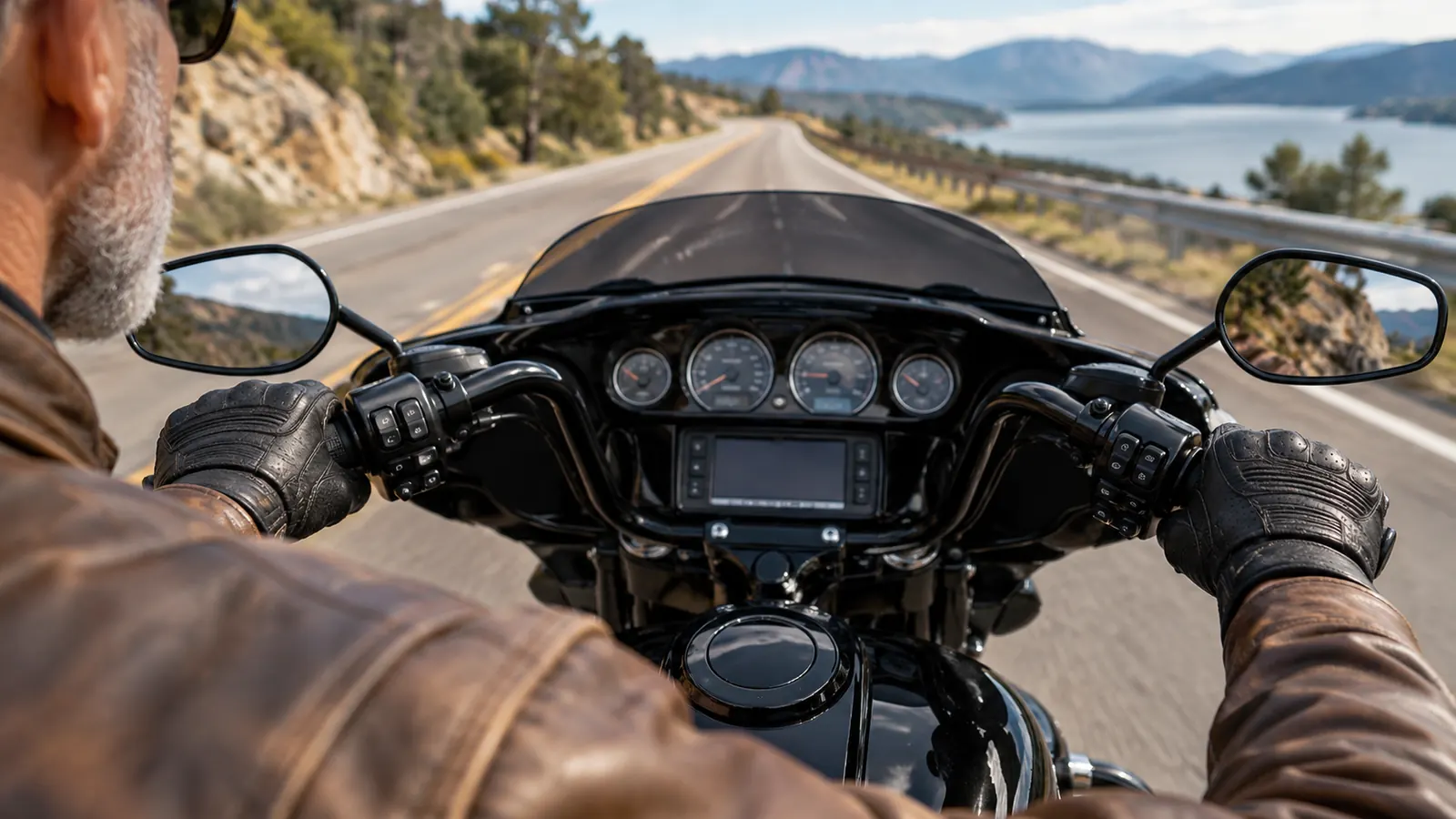
The first thing you notice is the feel. The COMMUTER gloves are cut close to the hand, and the palm is thin enough that you can feel the texture of the grip and the position of the brake lever right through the leather. That matters more than most riders realize. On a touring bike you spend hours with your hands on the bars, and a glove that insulates you from the controls makes every input feel vague and delayed. With the leather gloves, the bike feels like an extension of your arm. I found myself braking later and smoother because I could feel exactly where the lever was engaging, and on a long day that difference adds up.
The second thing is protection, and this is where leather still owns the argument. Leather is the benchmark for abrasion resistance in motorcycle gear, and it is not close. Textile gloves are built to handle a reasonable fall, but a leather palm slides across asphalt and keeps its structure while a fabric palm can wear through to the liner. I have seen the aftermath of both kinds of slides, and I know which one I want on my hands. The COMMUTER gloves have reinforcement across the palm and the heel of the hand, which is exactly where a rider lands. After a full season of daily use, the stitching is still tight and the leather has only gotten softer and more comfortable. That is what a good leather glove does.
Leather is still the benchmark for abrasion resistance, and the feel at the controls is something textile gloves just do not match.
Where Textile Riding Gloves Win
I am not going to pretend textile gloves are a compromise, because they are not. They win the weather battle outright. The pair I tested kept my hands dry through a solid 40 minutes of steady rain, and they did it without the clammy feeling you get from a leather glove that has soaked through and dried stiff. On cold mornings the insulated lining made a real difference. I left Twin Falls one morning at 38 degrees, and my hands stayed comfortable for the whole ride into town. In the same conditions, the leather gloves let the wind cut straight through, and after about twenty minutes my fingers were numb.
Textile gloves also win on convenience, and that counts for more than most gear reviews admit. There is no break-in period. They fit right the first time you put them on. When they get grimy from a summer of road dust and sunscreen, you toss them in the washing machine and hang them up to dry. Leather gloves need conditioner, careful drying, and a little patience. If you ride mostly in the rain and the cold, or if you simply do not want another piece of gear that needs tending, textile gloves are the honest choice. They are the pair I grab on the days when the forecast is genuinely bad.
What Most Reviews Leave Out
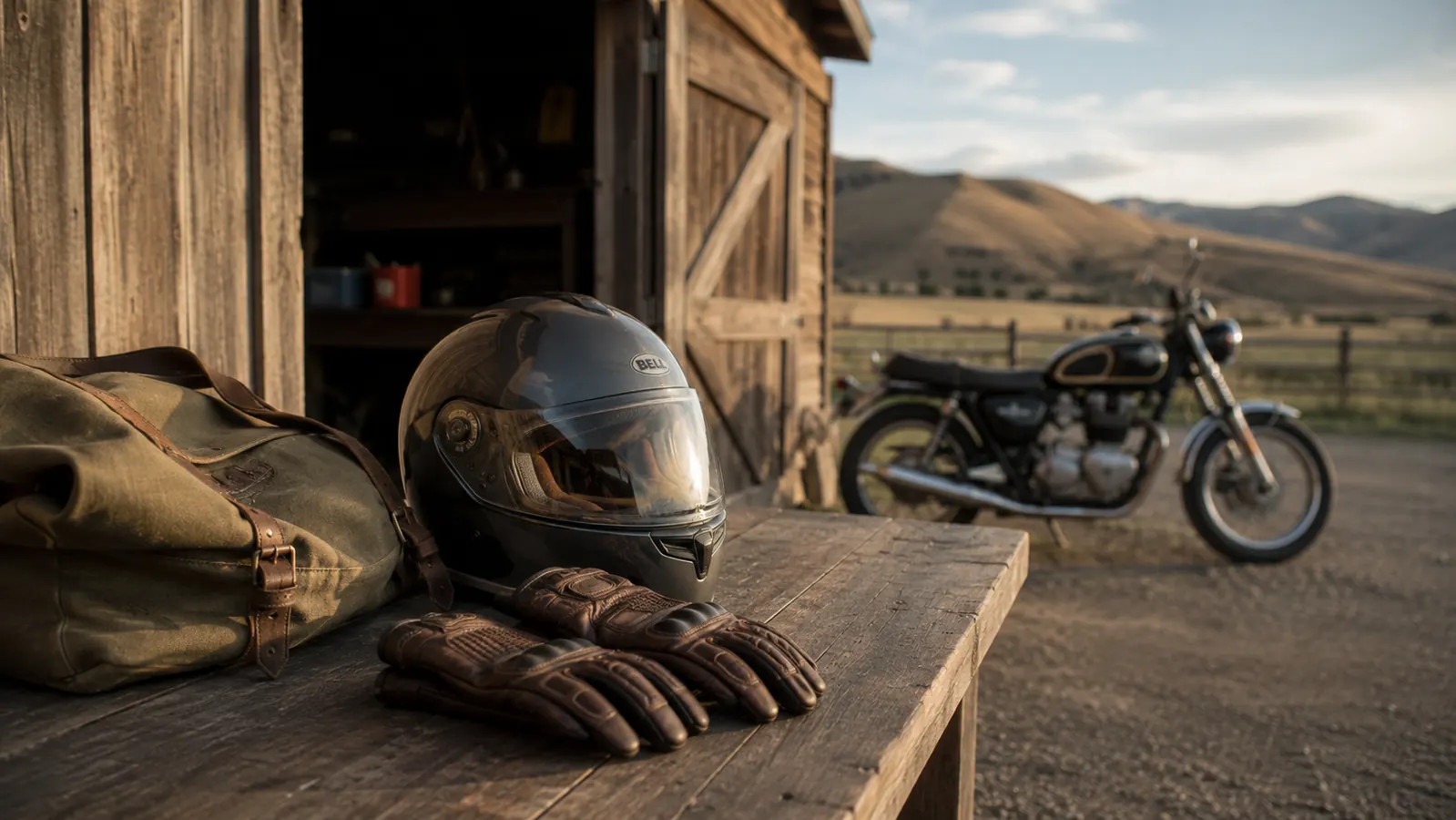
Nobody tells you that a new leather glove will fight you for the first two weeks. The COMMUTER gloves were stiff at the wrist when they arrived, and the first few rides felt like I was wearing cardboard. That is normal. Leather softens with use and with a little conditioner, and by the third week they had molded to my hands. The mistake most riders make is buying a leather glove that fits snug and giving up on it too early. Give it the break-in time, and it will fit better than anything textile.
The other thing nobody tells you is how much leather changes with the seasons. In the summer heat, a good leather glove breathes better than a waterproof textile glove, which can turn into a sauna by midday. The COMMUTER gloves stayed comfortable on 90-degree afternoons when the textile pair made my hands sweat. On the other hand, leather does not like being soaked and dried fast. If you get caught in a downpour, let them dry slowly at room temperature, not on a heater. That is the kind of care that separates a glove that lasts five years from one that cracks in two.
Leather protection and feel, ready for the road
The COMMUTER leather gloves give you the abrasion resistance and direct control feel that textile gloves cannot match, and after a season of daily use mine are only getting better. More than 6,400 riders have left a review. Check today's price on Amazon and see what they say.
Amazon Check Today's Price on Amazon →Who Should Buy Which
Buy the COMMUTER leather gloves if you ride in dry conditions most of the year, if you want the best abrasion protection you can get for your hands, and if you care about how the controls feel on a long ride. They are the pair I reach for every day from spring through fall. They are also the pair I would want on my hands if something went wrong, and I do not say that lightly. Spend the first couple of weeks breaking them in, condition them a couple of times a season, and they will outlast two or three pairs of textile gloves. For a rider like me, that is the definition of value.
Buy textile gloves if your commute is mostly rain and cold, if you ride a short distance and want something you can pull on without a break-in period, or if you simply will not do the maintenance that leather asks for. There is no shame in that. A good textile glove is a solid piece of gear, and it will keep you riding when the leather pair is hanging on the rack. For most riders the smart move is to start with a leather pair for the dry days and add a textile pair later for the weather. That is exactly what I did, and after a full season of switching between them, I would not give up either one. But if you can only buy one pair and you ride mostly in the dry, make it the leather.
The Bottom Line
The COMMUTER leather gloves are the better everyday glove for the rider who wants protection and feel, and the textile gloves are the better wet-weather tool. They do different jobs, and the table above lays out who wins where. I kept both pairs in my saddlebag all season, and I reached for the leather far more often. If your riding looks anything like mine, daily miles, weekend canyon loops, one long trip a year, the COMMUTER gloves will serve you well for years. And on the mornings when the rain is coming down, the textile pair will be right there waiting.
Ride with gloves that feel like they belong on your hands
If you ride in dry conditions and want real leather protection with a close, natural feel at the controls, the COMMUTER leather gloves are worth a serious look. Check today's price on Amazon and read the reviews from riders who have put their own miles on them.
Amazon Check Today's Price on Amazon →