
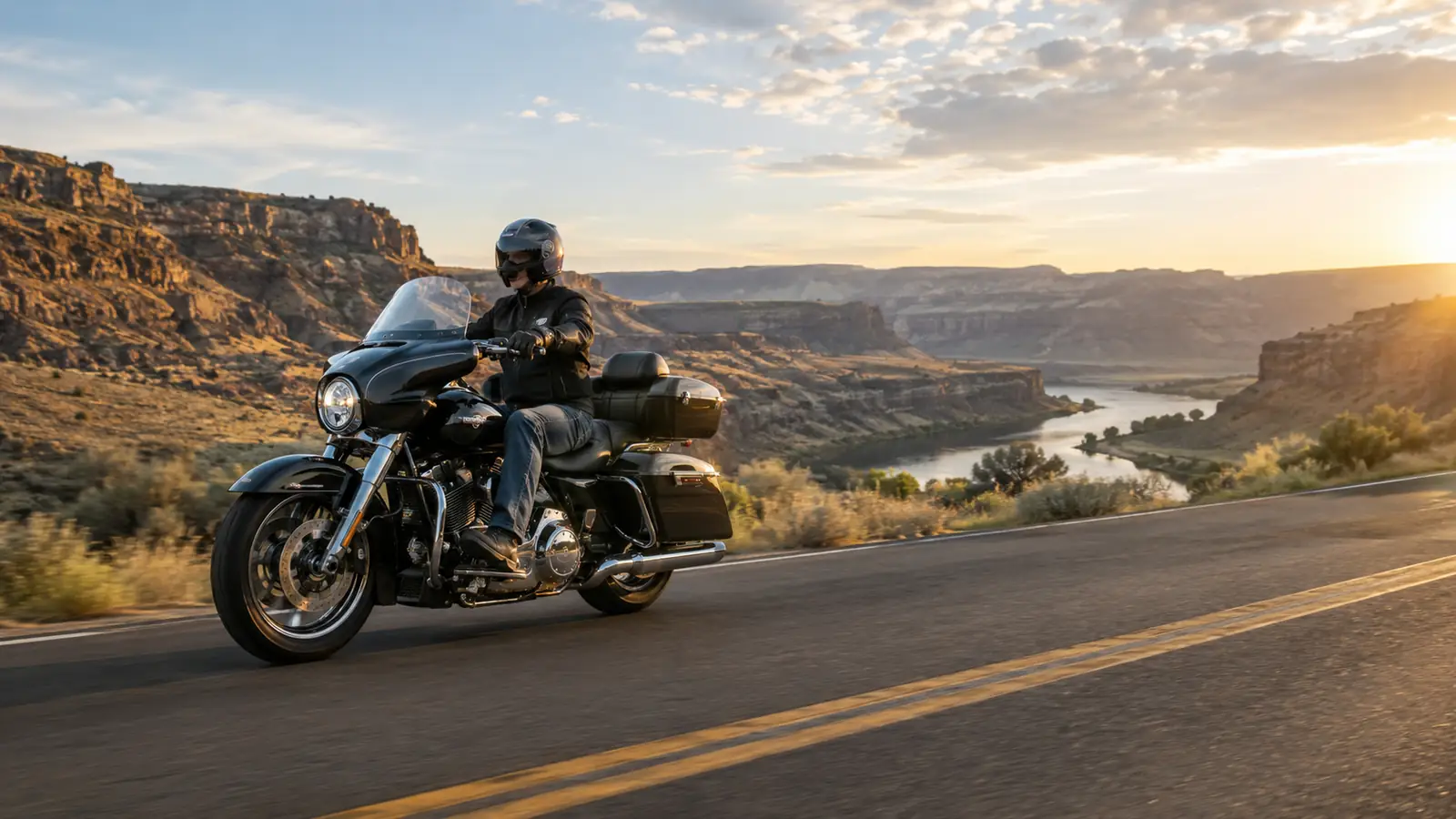
Last spring I hung a pair of COMMUTER leather gloves on the handlebar of my Road King and gave them a season to prove themselves. I've been riding about thirty years, and in that time I've burned through enough gloves to know most of them don't make it a full year. Cheap leather dries out and cracks. Stiff leather never breaks in. Heavily padded gloves turn your hands into clubs and you end up fumbling the controls. So I didn't expect much when I strapped these on for the first ride.
Nine months later, these are the gloves I reach for almost every ride. They've done the daily run into Twin Falls, the weekend loops through the canyon roads south of town, and a five-day haul across the high desert into Montana. They've been soaked in a summer thunderstorm, baked in triple-digit heat, and stuffed into a saddlebag at the end of long days. They show some honest wear. They also still fit like they did on day one. That's more than I can say for most of the gear in my closet.
The Quick Verdict
A hard-wearing leather glove for everyday riding that breaks in fast, protects your hands on the controls, and holds up through a full season of miles. Just know it is a short-cuff commuter glove, not a track glove, and cold mornings will test its limits.
Amazon Check Today's Price →A full season of daily rides, still holding together
The COMMUTER leather gloves have earned a permanent spot in my daily rotation. With a 4.4-star rating across more than 6,400 reviews, they're one of the most proven pairs in the commuter category. Check today's price on Amazon before your next ride.
Amazon Check Today's Price on Amazon →How I've Used It
I ride a 2017 Harley-Davidson Road King with about sixty thousand miles on it, and it's my only motorcycle. Most days I'm on it by seven in the morning, running the forty minutes into town for feed store errands and ranch business. Weekends I take the long way home through the canyon roads south of Twin Falls, where the pavement twists and the speed limit is more of a suggestion. In July I packed the saddlebags for a five-day trip across the high desert into Montana, and that is where these gloves got their real test.
That adds up to roughly four hundred miles a week, most of it in town traffic and two-lane canyon roads. I mention the mileage because gloves are judged by the miles, not by the months. A glove that sits in a garage looks new forever. These have been rained on, baked in the sun, and soaked in sweat on ninety-degree afternoons, and the leather has held together in ways I did not expect from a glove in this class.
The only thing I change is the liner situation. On cold fall mornings I wear a thin pair of liner gloves underneath, and that gets me down to about forty degrees before I start wishing for heated grips. In the summer I run them bare, and the leather breathes well enough that my hands don't swim in sweat by the time I get to town.
Fit and Break-In
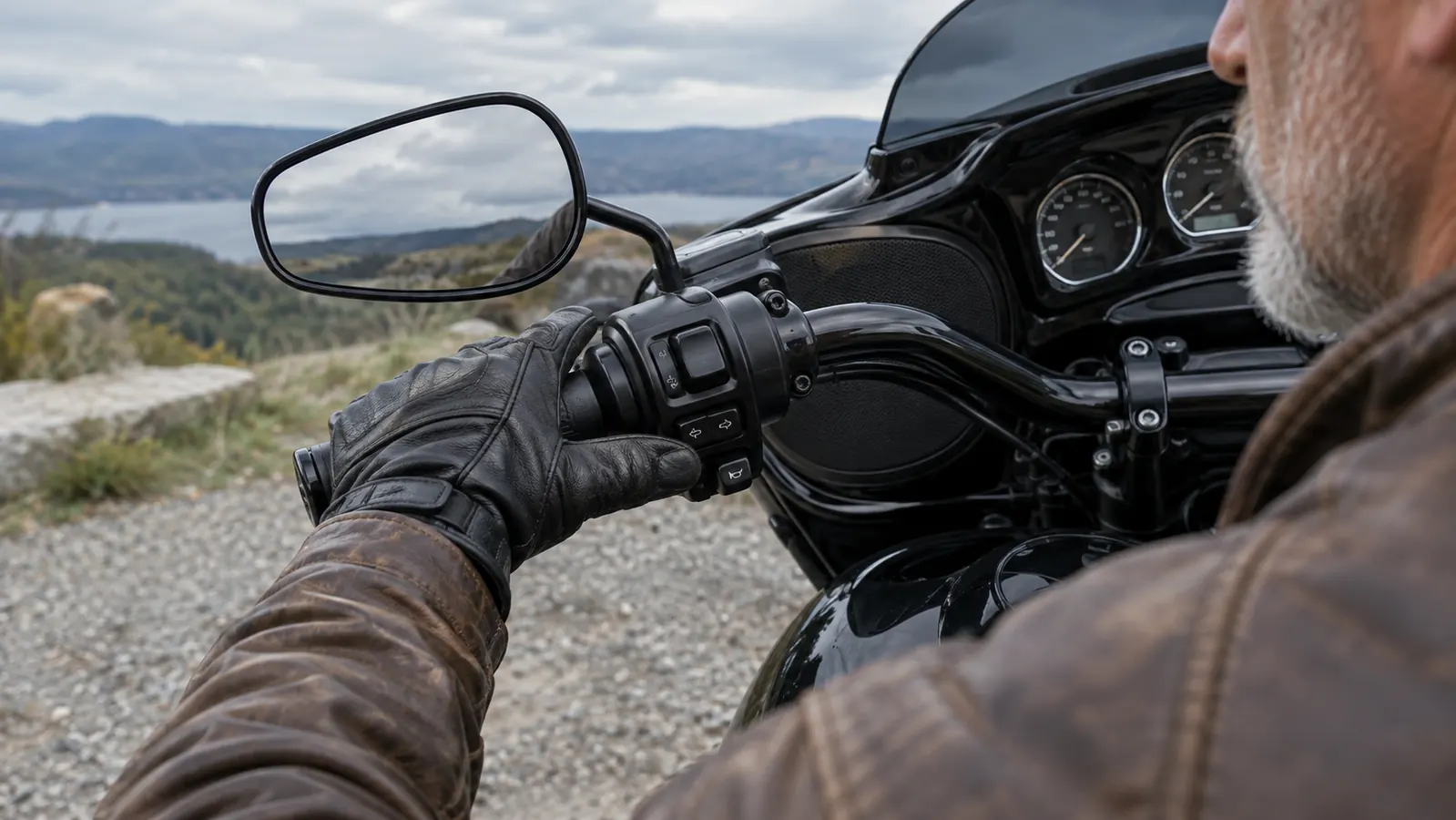
The first thing I noticed was how little break-in these needed. Some leather gloves feel like you're wearing two oven mitts for the first month. These were comfortable by the end of the first week. The leather is a medium-weight hide, not the thick armor-plate stuff you see on track gloves, and that is exactly what you want for a commuter glove. It flexes with your hand instead of fighting it.
I wear a large in most glove brands, and the large fit me true to size. The wrist closure is a simple strap that pulls snug and stays put, which matters more than it sounds. A glove that slips at the wrist makes every control input feel sloppy, and it lets wind and rain work their way inside. These stay locked down all day.
The fingers are pre-curved, which is one of those details you don't appreciate until you've ridden a few hours with gloves that aren't. Your hand rests in a natural grip position, so the throttle doesn't feel like a workout at the end of a long day. That adds up on a five-hundred-mile day.
One note on sizing: if you ride with heated grips or you plan to wear liner gloves in the winter, go up a half size. I ride bare most of the year, so the large works, but on the coldest mornings with liners underneath, the fit gets snug. That is a small thing, but it's the difference between a glove you reach for and a glove you leave in the saddlebag.
Protection Where It Counts
Let's be clear about what these gloves are. They are not track gloves, and they are not adventure gloves with carbon-fiber armor running up the wrist. They are a commuter glove with molded knuckle protection, padded palms, and a short cuff. For the kind of riding most of us actually do, that is the right call.
The knuckle padding sits over the back of the hand and does its job without turning the glove into a cast. I tested it the way nobody wants to test gear, taking a low-speed spill on a gravel shoulder last September. My hands came out of it with nothing worse than a bruised palm, and the glove came out with a scuffed knuckle pad and a couple of frayed stitches. No torn leather, no busted seams, no exposed skin. That is the only real-world test that counts.
The palm has a decent layer of padding where you grip the bars, and the stitching has held up through a full season of daily use. I've seen cheaper gloves come apart at the thumb seam within a month. These have stayed intact through every mile I've put on them.
I'll also say this plainly: no short-cuff glove is going to save your wrists in a serious crash, and these don't pretend otherwise. What they do is handle the everyday stuff, the low-speed drops, the gravel scrapes, the times you put a hand down to catch yourself at a stoplight. For the riding most of us actually do, that's the protection that matters.
Dexterity and the Daily Controls
A commuter glove lives or dies by how well you can work the controls, because you're constantly using the turn signal, the horn, the throttle, and the brake. The COMMUTER gloves get this right. The leather is thin enough at the fingers that I can find the signal switch without looking, and I can work a jacket zipper or a fuel cap without pulling a glove off.
The touchscreen fingertips work, which is rare enough that it's worth calling out. I've had gloves that claimed touchscreen compatibility and then made me take them off every time I needed the GPS on my phone. These let me swipe and tap well enough to pull up a route or answer a call without dismounting. They are not as precise as a bare finger, but they're functional, and that is the standard that matters.
The one thing I'd change is the cuff length. These are short-cuff gloves, so they leave your wrists exposed. That is fine for most summer riding, but it means there's a gap between the glove and your jacket sleeve in the wind and the rain. I pair them with a jacket that has a snug cuff and I don't notice it. If you ride in a flapping windbreaker, you will.
The grip feel on the throttle is worth a mention. Because the leather is not overly thick, I can feel the grip through the glove, which makes long highway miles less tiring. There is a directness to it that thicker gloves just don't have. Some riders prefer more insulation between their hand and the bars, but for me, the feel is the point.
How the Leather Held Up
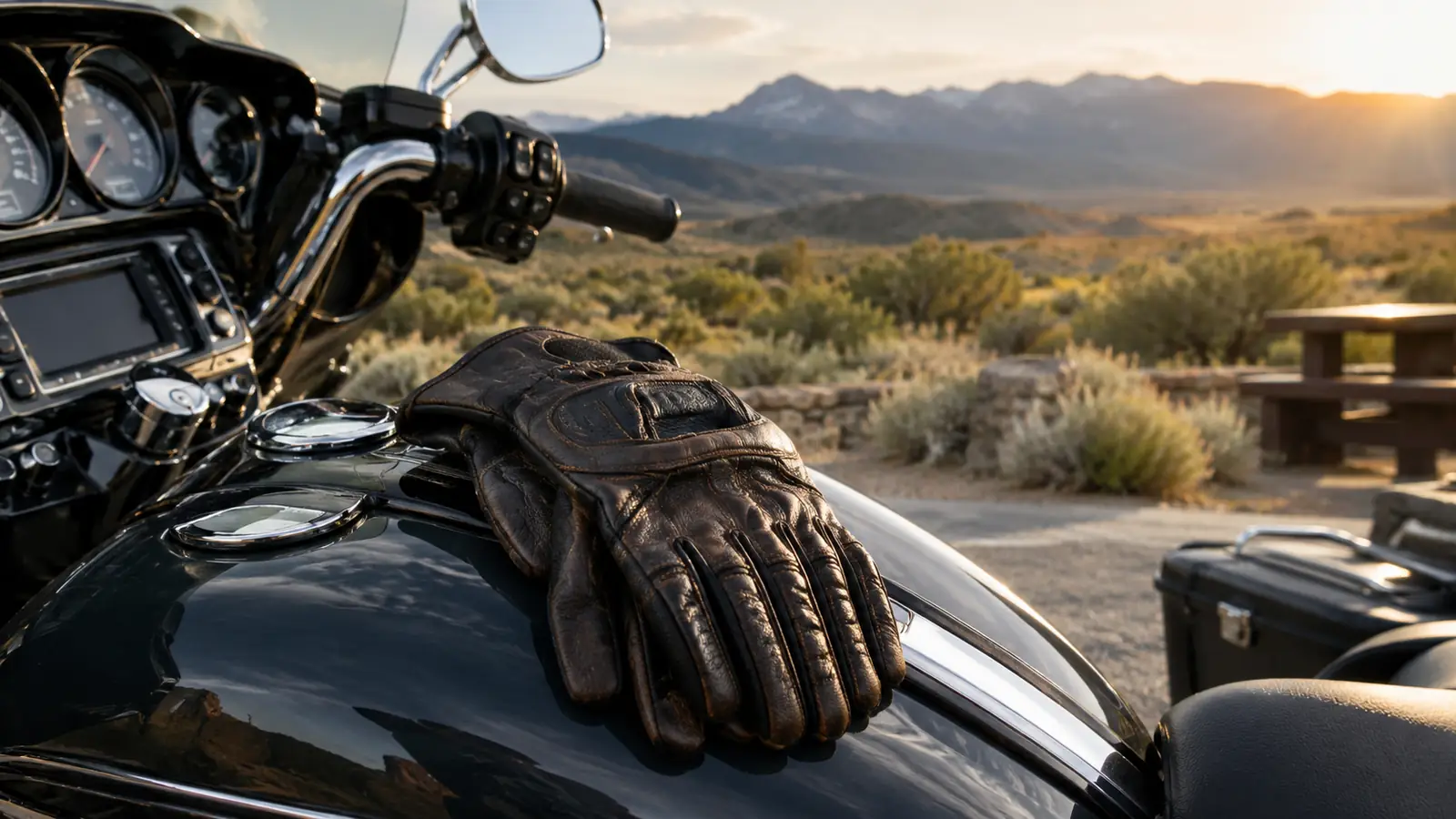
The real test of any leather glove is what it looks like after a few thousand miles, not after a few weeks. I put roughly four thousand miles on these between April and November, and the wear is honest but not alarming. The leather on the right palm has a thin spot where I grip the throttle, and the knuckle pad on the right glove carries the scuff from the gravel spill. The stitching is intact everywhere except the one spot where the spill pulled a few threads loose, and even that spot is holding, just a little fuzzy at the edge. Nothing has come apart, nothing has blown out a seam, and nothing has worn through to the liner.
The leather has softened with use, which makes them more comfortable, and they haven't dried out or cracked even after getting soaked in that August thunderstorm. I clean them with a damp cloth and treat them with a light coat of leather conditioner every few weeks, and that has been the whole maintenance routine.
What I'm watching now is the liner. The inside of the gloves shows some wear at the fingertips, which is normal for a season of daily use. If I get another full season out of them, I'll consider that a win at this price point. If they make it two, they'll have outperformed every other pair of gloves I've owned.
Cold Mornings and Rain
I'll give you the honest limits, because too many reviews skip this part. These are not winter gloves. The leather is breathable, which is great in July, but it means cold air moves through on a forty-degree morning. With liner gloves underneath I'm comfortable down to about forty degrees, and below that I'm looking for heated grips or a heavier glove. That is not a flaw so much as a boundary, and you should know it before you buy.
Rain is a mixed bag. The leather soaks through eventually in a sustained downpour, and once wet, it takes a while to dry out. I got caught in that August thunderstorm about twenty miles from home, and by the time I pulled in, my hands were wet. The gloves dried overnight on the kitchen counter and they were fine the next morning, which is more than I can say for some synthetic gloves I've owned that never quite smelled right again.
The lesson is to know what you're buying. These are a three-season commuter glove for a rider who deals with the occasional shower, not a waterproof expedition glove for someone who rides through the Pacific Northwest winter. If you ride year-round in a rainy climate, you want a waterproof shell or a longer gauntlet, and I'd say so even if it costs this pair a sale.
What I Liked
- Breaks in fast, comfortable within the first week
- Solid molded knuckle protection that held up in a real low-speed spill
- Good dexterity for signals, throttle, zippers, and touchscreens
- Stitching and leather survived a full season and a soaking rain
- Simple wrist strap that stays put all day
Where It Falls Short
- Short cuff leaves wrists exposed to wind and rain
- Not a cold-weather glove, breathable leather lets heat out on winter mornings
- Leather soaks through in a sustained downpour
- Right palm shows a thin spot after about four thousand miles
Four thousand miles, one gravel spill, one soaking thunderstorm, and the stitching is still holding. I did not expect that from a glove in this class.
Who This Is For
If you're a daily commuter who rides in town and on back roads, and you want a glove that protects your hands without making you fight the controls, the COMMUTER leather gloves are a sensible pick. They break in fast, they breathe in the heat, and they've got the padding where your hands actually need it.
They're also a good first leather glove if you're newer to riding and don't want to spend a lot to find out what you like. You can put a season of miles on these, learn what matters to you in a glove, and upgrade later if you want to. That is exactly the role they filled for me.
Who Should Skip It
If you ride year-round through serious winters, or you live somewhere it rains every week, these aren't the glove for you. The short cuff and the breathable leather are the wrong tools for those conditions. Look for a gauntlet-style waterproof glove instead.
And if you're doing track days or aggressive canyon riding at a pace where you might slide at speed, you want a glove with more armor and a longer cuff. These are honest commuter gloves, and they're best at exactly that job. Buy them for the commute and get something more serious for the track.
Put a season of miles on the COMMUTER leather gloves
They've earned a permanent spot in my rotation, and with more than 6,400 reviews behind them, I'm not alone. Check today's price on Amazon and see if they fit your commute.
Amazon Check Today's Price on Amazon →