
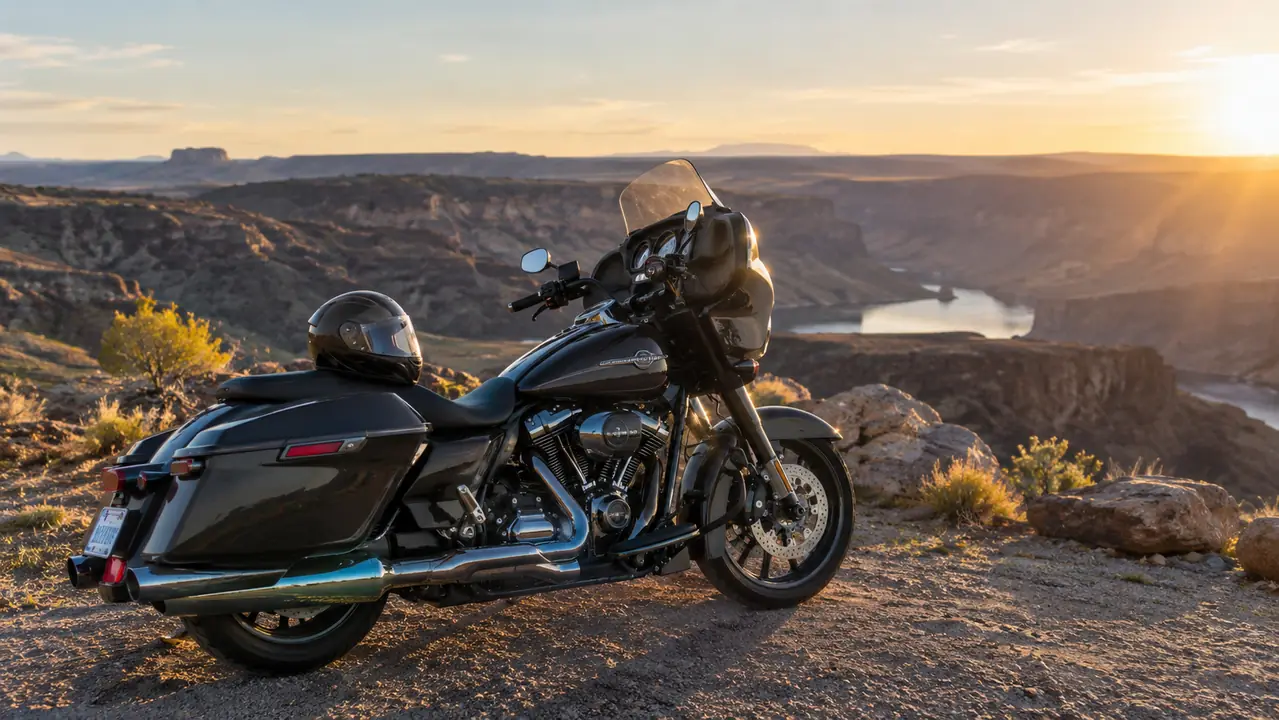
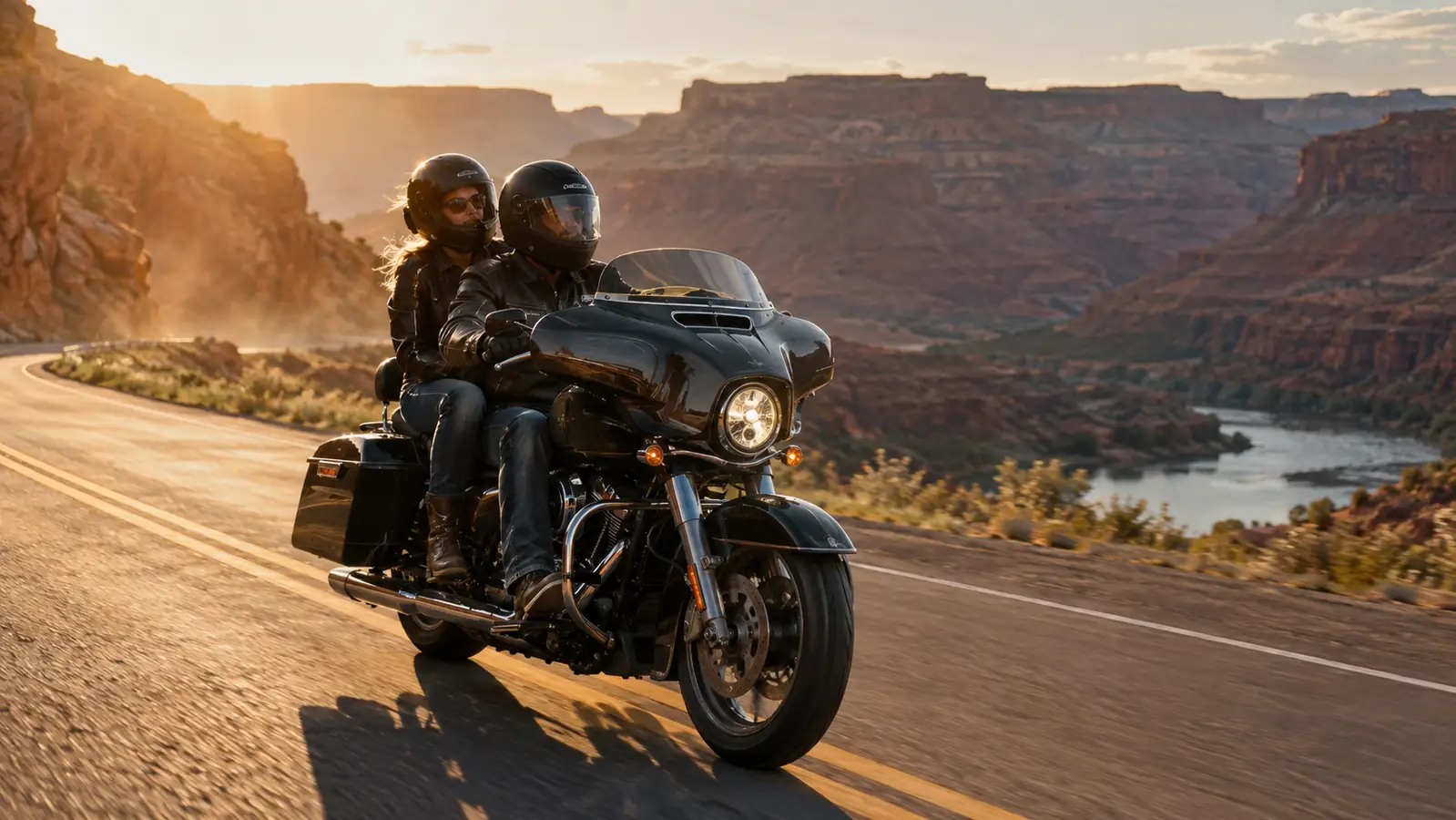
I bought the Cardo Spirit for one reason: my wife Carol and I got tired of yelling at each other through wind noise at 70 mph. She rides pillion on our weekend loops through the canyon roads south of Twin Falls, and for years our whole communication system was hand signals, a shoulder tap, and the occasional scream. I had read every forum thread about helmet communicators I could find, and the Cardo name kept coming up in the same sentence as 'dependable.' The Spirit is the brand's entry-level unit, and on paper it looked like exactly what we needed without the price tag of the bigger mesh models. So I ordered one, mounted it on my helmet, and started stacking miles.
A quick word on how I review gear, because I think it matters. I am not a lab tester. I did not measure decibels with a meter or run signal tests in a parking garage. I am a 54-year-old part-time rancher who rides most days, and I care about whether a thing works when I am halfway up a canyon with a thunderstorm stacking over the rim. This is what the Spirit did over about six weeks and a thousand miles of mixed riding: daily trips into town, weekend loops through the canyons, and one long multi-state trip with Carol on the back.
The Quick Verdict
Good sound, a battery that outlasts a full day, and pairing that works once you learn the button logic. The app is clunky and the buttons are fiddly with gloves, but for rider-to-passenger chatter it has done the job on every ride so far.
Amazon Check Today's Price →If You Ride With a Passenger, This Is the Fix for Yelling Into the Wind
The Cardo Spirit is the entry point that actually works. No antenna, no pairing nightmare, just a button you can find with gloves on. I have used it on canyon loops and a full day of touring, and it has not let me down.
Amazon Check Today's Price on Amazon →How I've Used It
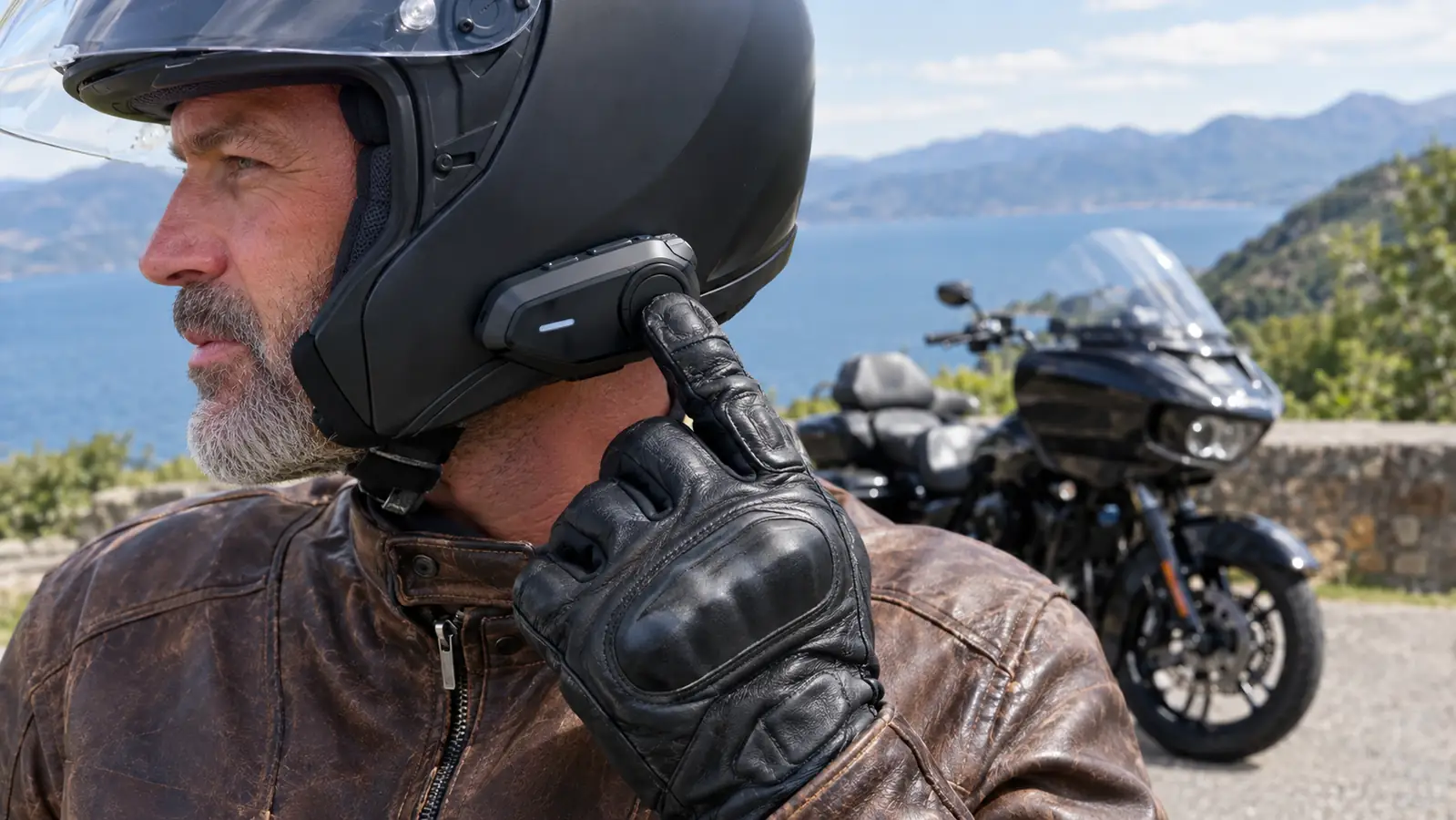
Our setup is about as simple as it gets. Carol rides pillion on the Road King, so we are using the two-way intercom, not a group chat. The Spirit mounts on the left side of the helmet with a clamp that took me about four minutes to install, and the only tool you need is the small Allen key in the box. The 32mm speakers slide into pockets under the helmet lining, and the microphone tucks up inside the chin curtain. I did not have to cut or modify anything, which was my main worry going in.
Most of my riding is short and noisy: daily trips into town, errands, the usual. The Spirit earns its keep there too, mostly for taking an occasional call and hearing GPS directions over wind. But the weekend canyon loops are where it really matters. We do a two-hour loop on a Saturday, and for the first time in years Carol can tell me to slow down or point out a turn without waving her arms in my peripheral vision. On the long summer trip we ran the intercom for six or seven hours a day, and the unit never once died on us.
One note on fit. The clamp is designed to work on most full-face and modular helmets, and it comes with a couple of thickness pads so you can match it to your helmet's shell. On my helmet the clamp sits snug and I have not had it shift, even at speed. If you ride with a half helmet or a helmet with a very thin shell edge, check the mounting options before you buy, because the clamp needs something solid to grab.
What the Cardo Spirit Does Well
The first thing you notice is the speaker quality. For a 32mm speaker that sits flat against your ear, the sound is genuinely good. Music has some bass to it, not the tinny rattle I expected from something this thin, and voices come through clear at highway speed. I listen to podcasts on my daily rides, and I can follow the thread at 60 mph without cranking the volume to max. That alone puts it ahead of the cheap headsets I tried years ago.
The battery is the real story, and it is the reason I kept the unit past the return window. Cardo claims eight hours of talk time, and in my use that number is honest, maybe even conservative. On the long trip we ran the intercom most of a full riding day and the low-battery warning did not appear until the last stretch home. It charges with a magnetic cable that snaps into place without fumbling, which matters when you are plugging it in at a motel room at midnight after a long day.
Pairing is simpler than the forums made it sound. The first time you power it on, it goes straight into pairing mode and shows up on your phone. The intercom works like a phone call between the two units, and after the first pairing they connect automatically whenever both are powered up. In six weeks I have had exactly zero days where we had to pull over and fight with it. That is the thing I actually care about, because a communicator that needs a roadside troubleshooting session is worse than no communicator at all.
What Nobody Tells You Before You Buy
The buttons. Nobody warns you about the buttons. The Spirit has three of them, and they are small, flat, and easy to confuse when you are wearing gloves. The main button sits on the left, and the volume rocker is on the right, and the logic of which button does what is not obvious at first. Six weeks in, I still occasionally hit the wrong button and mute my music instead of turning it up. You build the muscle memory eventually, but it takes longer than it should, and it is the most common complaint I would warn a friend about.
The intercom is two-way, not multi-way. The Spirit pairs with your phone and with the Cardo Connect app, and it can link to other Cardo units, but it is not built for a group of four riders chatting all at once. If you ride in a pack, you want one of the mesh models or a unit designed for group conversation. For a rider and a passenger this is plenty, and I do not mean that as a criticism. It is just a limit you should know about before you buy it expecting group features.
The voice prompts are another small thing that nobody mentions. The unit talks to you in a pleasant voice that tells you what is happening: connected, battery low, volume max. That is fine. What is less fine is that the default voice is set to English and changing it, or turning it off, requires digging through the app. It is a minor gripe, but it is the kind of minor gripe that adds up over a long season of riding.
The other thing I would tell a friend is that the Spirit takes a couple of rides to get used to, and I do not mean the hardware. The sound profile, the button placement, the way you angle the microphone, all of it settles in after a few hundred miles. My first ride with it I kept reaching for the wrong button. By the end of the first week I was adjusting volume without thinking. Give it that week before you decide whether you like it, because the first impressions are not the real product.
We ran the intercom six or seven hours a day on the long trip, and the low-battery warning never showed up before the last stretch home.
The 32mm Speakers: Comfort vs. Volume
The whole selling point of the Spirit's speakers is that they are 32mm, thinner than the older Cardo units, so they fit into helmets that do not have deep speaker pockets. On my helmet, which is not a dedicated comms helmet, they sat flat under the lining and I could not feel them pressing on my ears even after a six-hour day. That matters more than it sounds. The last communicator I tried left a sore spot on my ear by lunch, and I stopped wearing it.
The tradeoff shows up at speed. Up to about 65 miles an hour the speakers keep up fine with wind noise. Above that, with the Road King's windshield and a full-face helmet, music starts to lose the fight. You can still hear the intercom, but you will be turning the volume up and accepting some distortion. On a naked bike or a bike with no fairing, you will hit that wall sooner. Cardo makes louder units with bigger speakers, and that is the main place where the Spirit's entry-level price shows itself.
For what it is worth, I think the tradeoff is the right one for most riders. Loud speakers that hammer your ears for eight hours are not a feature, they are a headache. The Spirit is tuned to be comfortable first, and I would rather have a unit I forget I am wearing than one that wins a volume contest and leaves my ears ringing. If you ride a loud bike and need maximum volume, look at the step-up models. If you want all-day comfort, this is the direction you want.
The Mic, Phone Calls, and the Everyday Stuff
The microphone tucks up inside the chin curtain, and it is the part of a communicator that usually lets me down. On the Spirit, callers tell me I sound clear, not like I am calling from the inside of a washing machine. That is the highest praise I can give a helmet mic. The wind noise cancellation does not make you sound like a podcast host, but it keeps your voice readable at speed, which is the actual job.
Phone calls are straightforward. The headset connects to your phone, and a tap on the main button answers or ends a call. I use it mostly for the rare call I cannot ignore, and for GPS directions, which come through the same speakers. One thing I will say: the Spirit does not have voice assistant support that works well in my experience, so do not buy it expecting to bark commands at it. You get buttons, and the buttons work.
The App, the Battery, and the Small Stuff
The Cardo Connect app works, but it feels like it was designed by people who assumed you would open it twice a year. You use it to change the voice prompt language, update firmware, and adjust audio profiles. Getting it to recognize the unit took two tries on my phone, and the menus are not laid out the way you expect. It does the job. It just does not do it gracefully, and you should budget ten minutes of patience for the first setup.
The advertised intercom range is 400 meters, and in my experience that number is optimistic. With one unit on the bike and the other back at the truck, the signal gets scratchy somewhere around 100 meters and drops out past that. For a rider and a passenger it never matters, because you are two feet apart. But if you were hoping to ride ahead and stay connected to a friend on another bike, this is not the unit for that job.
The waterproofing, though, is real, and I am picky about this because I have killed electronics in Idaho rain before. We got caught in a proper storm on the long trip, the kind where you just accept that you are wet for the next two hours, and the Spirit never blinked. The charging port is covered by a rubber flap that fits snugly, and the unit is IP67 rated. I have not babied it. It has not complained.
The other small thing worth mentioning is the music sharing. You can share music from your phone to the passenger's headset if they have a compatible unit, so you are not both tethered to the same source. We have not used this much, because Carol mostly wants to talk, not listen to my playlists. But it works when we have tried it, and it is a nice option to have on a long trip.
What I Liked
- 32mm speakers fit helmets without deep speaker pockets and stay comfortable on long days
- Battery genuinely lasts a full day of intercom use
- Pairing is straightforward after the first setup
- Waterproof, dependable, and easy to install in minutes
- Clear intercom at highway speed for rider and passenger
Where It Falls Short
- Buttons are small and easy to hit wrong with gloves
- Two-way only, no group intercom for packs
- Cardo Connect app is clunky and sometimes slow to recognize the unit
- Intercom range falls well short of the advertised number
- Music gets distorted above 65 mph on bikes without fairings
Who This Is For
Buy the Cardo Spirit if you ride with a passenger and you are done with the shoulder-tap system. Buy it if you want turn-by-turn directions in your ear without sticking your phone to the handlebars. Buy it if you want a communicator that is genuinely waterproof, genuinely comfortable on a long day, and genuinely easy to install. It is the right tool for a rider and one passenger, and it does not try to be anything more.
It is also a good first communicator. If you have never used one and you are not sure you will like having a voice in your helmet all day, the Spirit is a low-risk way to find out. It covers the basics well, it will not frustrate you out of the hobby, and if you decide you want the mesh features and the group chat, you will know exactly what you are upgrading for. I think that is a fair way to describe an entry-level product.
Who Should Skip It
Skip it if you ride in a group and need to talk to three or four people at once, because the two-way intercom will not do that. Skip it if you spend most of your time above 70 miles an hour on a bike with no fairing and you want music you can actually hear, because the speakers will lose that fight. Skip it if you want the full Cardo ecosystem with mesh networking, voice commands, and the bigger feature set, because the Spirit is deliberately basic.
And be honest with yourself about the buttons. If you are the type who will not read the quick-start guide and will not spend a couple of rides building the muscle memory, the button layout will frustrate you every single time you ride. It gets better with practice, but it never gets perfect. That is the honest tradeoff at this price point, and it is the reason I would tell a friend to think about it before buying, not after.
The Bottom Line: Good Comms, Small Quirks, Fair Tradeoffs
For a rider and a passenger, the Cardo Spirit does what it promises and nothing it doesn't. It is not the fanciest unit on the shelf, and the buttons will test your patience. But it has never left us unable to talk, and after a thousand miles, that is the whole job.
Amazon Check Today's Price on Amazon →