
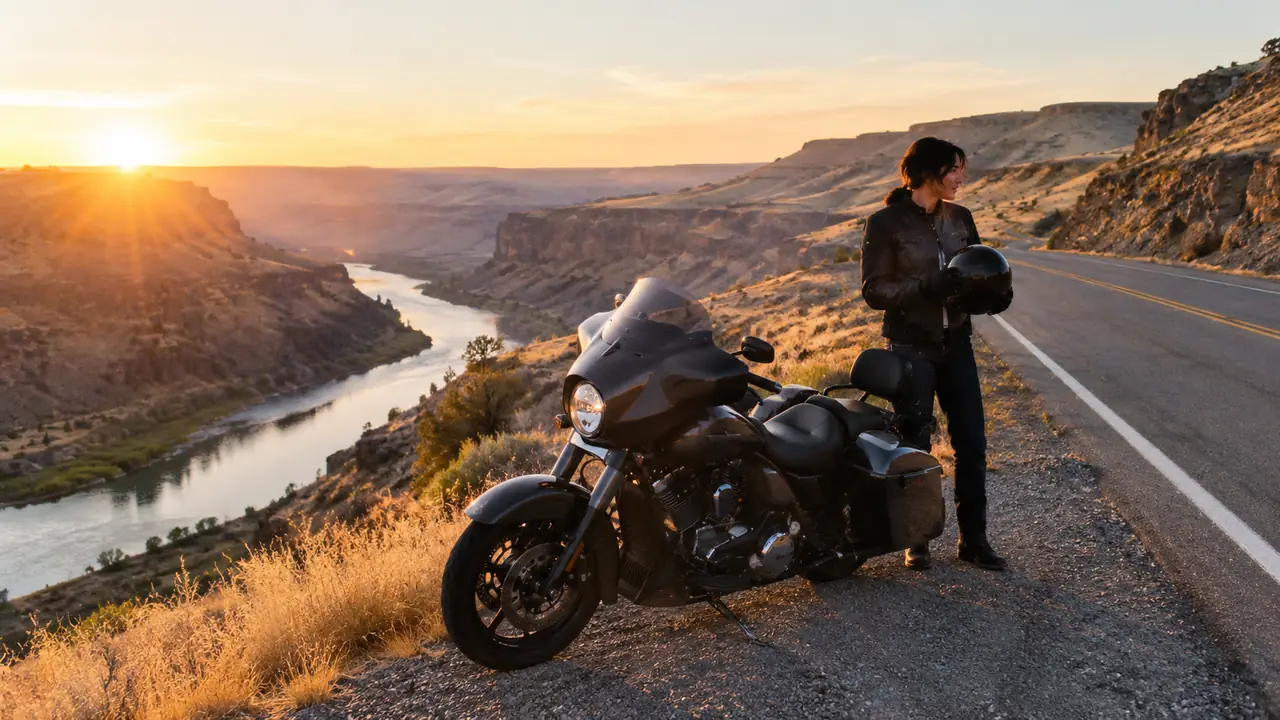
Every rider who has ever shopped for helmet audio has stood in the same aisle, staring at a budget headset and a premium one, wondering what the extra money actually buys. I have been that rider more than once. So this spring I settled it the only way I know how: I ran the Cardo Spirit on my Road King and a popular budget Bluetooth headset on a spare helmet for a full month of commuting, canyon loops, and one long weekend trip. Same roads, same wind, same ears. Same helmet model on both sides, too, because I wanted the test to be about the electronics, not about one shell blocking wind better than the other. I kept a notebook in the tank bag and wrote down what I heard on each ride: wind noise, call clarity, battery level at the end of the day, anything that stood out. By the end of the month I had entries for every day of the week, in sun, wind, and rain. That notebook is where the rest of this article comes from.
Short answer: the Cardo Spirit is worth the money if you ride at highway speed, ride in the rain, or care about being able to hear the person you are talking to. The budget headset is fine around town. The gap between them is not about features on paper. It is about what happens at 70 mph with a semi truck beside you. It is about a 300-mile day when the forecast lied and the clouds opened up. And it is about the difference between a device you fiddle with and one you forget is there. If you want the short version before I get into the details: I ended up using the Cardo as my daily headset, and the budget unit went back on the shelf where spare parts live. But the budget unit earned its place in this comparison, because it showed me exactly what the extra money buys. What it buys is not more features. Both units pair to a phone, both make calls, both play music. What it buys is the difference between gear that works and gear that works when it matters.
| Cardo Spirit | Budget Bluetooth Headset | |
|---|---|---|
| Speaker quality at speed | 32mm speakers with JBL-tuned audio, clear voice at 70 mph | Thin speakers that get mushy past 55 mph, wind noise wins |
| Wind noise handling | Background noise suppression keeps voice audible in gusts | No noise handling, rider hears mostly wind roar |
| Weather protection | Waterproof, kept working through a full rainstorm | Flimsy port cover, cut out in light drizzle |
| Ease of setup | Pairing takes under a minute with voice prompts | Pairing works but the buttons are fiddly with gloves on |
| Battery life | Roughly 10 hours of real talk time, a week of commuting | Claimed 8 hours, got closer to 5 after six months |
| Price | Costs roughly two and a half times as much | Cheap enough to replace without thinking twice |
| Best for | Highway touring, rain, riders who want to actually converse | Short commutes under 50 mph, spare helmets, first-timers |
Where Cardo Wins
The first thing you notice is the speakers. The Cardo Spirit uses 32mm speakers tuned by JBL, and on the road that is not marketing talk. It is the difference between hearing your wife say "take the next exit" and hearing something that sounds like a radio playing in the next room. I ran both headsets back to back on the same stretch of I-84 at 70 mph on a Tuesday morning in late April, traffic moving fast, a semi pacing me in the right lane. With the budget unit, I had to drop to 55 to understand a phone call, and even then I caught maybe every third word. The voice sounded thin and distant, like it was coming through a pipe. With the Cardo, I did not change speed once. The voice stayed in front of the wind noise instead of buried behind it. That sounds like a small thing until you miss an exit because you misheard the directions, which is exactly what happened to me on the budget unit the week before. The exit I missed was one I take every week, which made it worse. I knew the road, I knew the exit was coming, and I still could not make out the words in time. I had to ride an extra 14 miles to double back, and I spent the whole detour wondering how many other riders were having the same experience and just living with it. That is the real cost of a thin speaker at speed: it does not just sound bad, it makes you second-guess a road you already know.
The second thing is the noise suppression. Cardo built background noise reduction into the microphone, and it shows. On the budget headset, Carol could hear the wind and the engine more than she could hear me. She said it sounded like I was calling from the side of a freeway, which I basically was. On the Cardo, she said it sounded like I was standing in the kitchen. Same helmet, same road, same wind, and she could hear the difference on her end of the call. That single difference is what makes the Cardo feel like a tool instead of a toy. A communicator that makes the person on the other end say "what?" six times is not a communicator, it is a paperweight with a battery. I have used enough cheap headsets over thirty years of riding to know that sentence from both sides of it. The test that convinced me was a ten-minute call with Carol while I ran the canyon loop above the Snake River. Gusts were steady at 25 mph, and she heard every word the first time. On the budget unit, the same stretch of road meant three rounds of "say again?" before I gave up and called her back from the gas station.
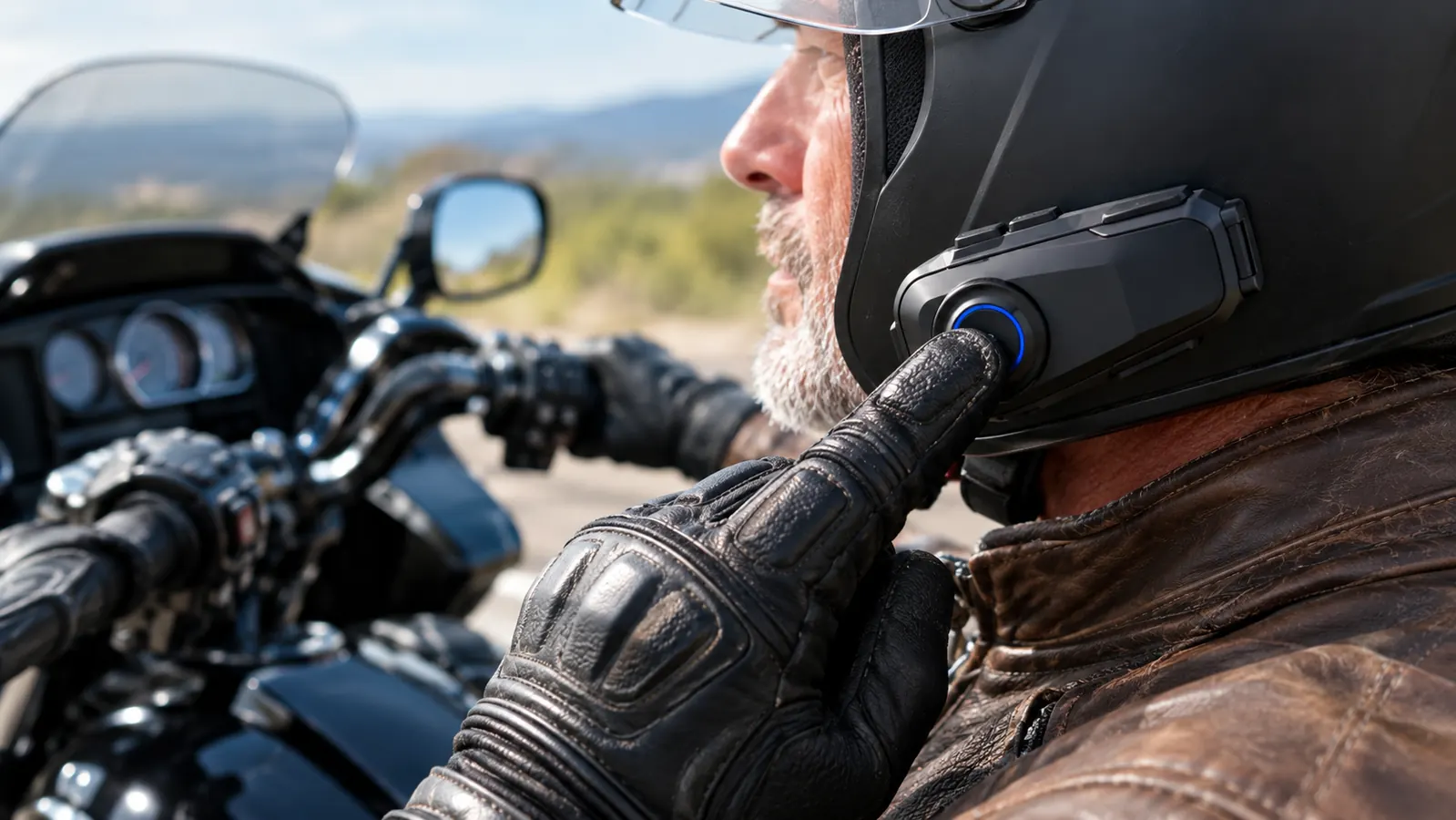
Weather resistance is the third place the Cardo pulls ahead, and it is the one I did not expect to matter. I got caught in a solid downpour outside Burley on the last Saturday of the trip. Rain came in sideways, the kind that soaks through a textile jacket at the shoulders and turns the road into a mirror. The Cardo kept working the whole way home, forty miles of steady rain, and the voice on the other end never once said I was cutting out. The budget unit cut out twice in light drizzle the same month, once on the way to the feed store and once heading home from town. I pulled over, dried the port with a shop rag, and it came back, but I lost the call both times and spent the rest of those rides watching the sky. On a touring bike, weather is not an exception, it is part of the plan, and a headset that dies in drizzle is a headset you cannot trust on a long trip. One more thing: the Cardo's buttons are easy to find with gloves on. In the rain, with the visor fogged and traffic stacking up, I could hit the right button without looking. The budget unit's controls are smaller and sit closer together, and I fumbled them more than once at a stoplight. That matters more than you think when you are already juggling a clutch and a throttle.
Where the Budget Headset Wins
Let me be fair, because the cheap headset is not a scam. It costs about a third of what the Cardo costs, and for what it does, that price is honest. Around town, under 50 mph, it is perfectly usable. I used it for a week of short commutes, fourteen miles round trip on surface streets, and it handled music and the occasional call fine. Pairing took about a minute once I figured out which button was which, and the volume was plenty at 45 mph. It only got thin past 55, and even then it was usable for music if you were willing to ride with the volume pinned. If you only ride to work on surface streets and never talk to anyone at speed, you may never feel the difference. Plenty of riders never go above 50, and for them the budget unit is not a compromise, it is a reasonable choice. One more thing in its favor: the battery is built into the clamp, so there is no separate puck to lose. I have lost more than one accessory to the gap between the seat and the fairing, and the all-in-one design of the budget unit is genuinely easier to live with on a day-to-day basis. It is not a better headset, but it is a simpler one.
It also wins on worry. When the budget unit fell off my spare helmet in the garage and scuffed the casing, I shrugged. When I dropped it on the concrete floor of the shop and split a seam, I fixed it with superglue and went on with my day. When something costs a fraction of the premium unit, you do not think about it much. There is real value in that if you are buying a headset for a passenger helmet that gets used twice a season, or if you just want to try helmet audio without committing. The budget headset is a fine way to learn what you actually need before spending more. It taught me that I need noise suppression, weatherproofing, and speakers that do not quit at highway speed. It also taught me that those three things are worth paying for. The other thing the budget unit taught me is that the mount matters. The Cardo's clamp is stiffer and has a positive click when it seats. The budget unit wiggled on the helmet shell and worked loose twice over the month. Neither fall hurt the unit much, but a headset that needs re-seating at every gas stop stops being convenient. I tightened it, I moved it, I even tried a thin strip of tape under the clamp, and it still worked its way loose on rough pavement.
If you ride at highway speed, this is the one that actually works
The Cardo Spirit is the headset I reach for every time I swing a leg over the Road King. Clear calls at 70 mph, weatherproof, and it pairs in under a minute. Check today's price on Amazon and see if it fits your riding.
Amazon Check Today's Price on Amazon →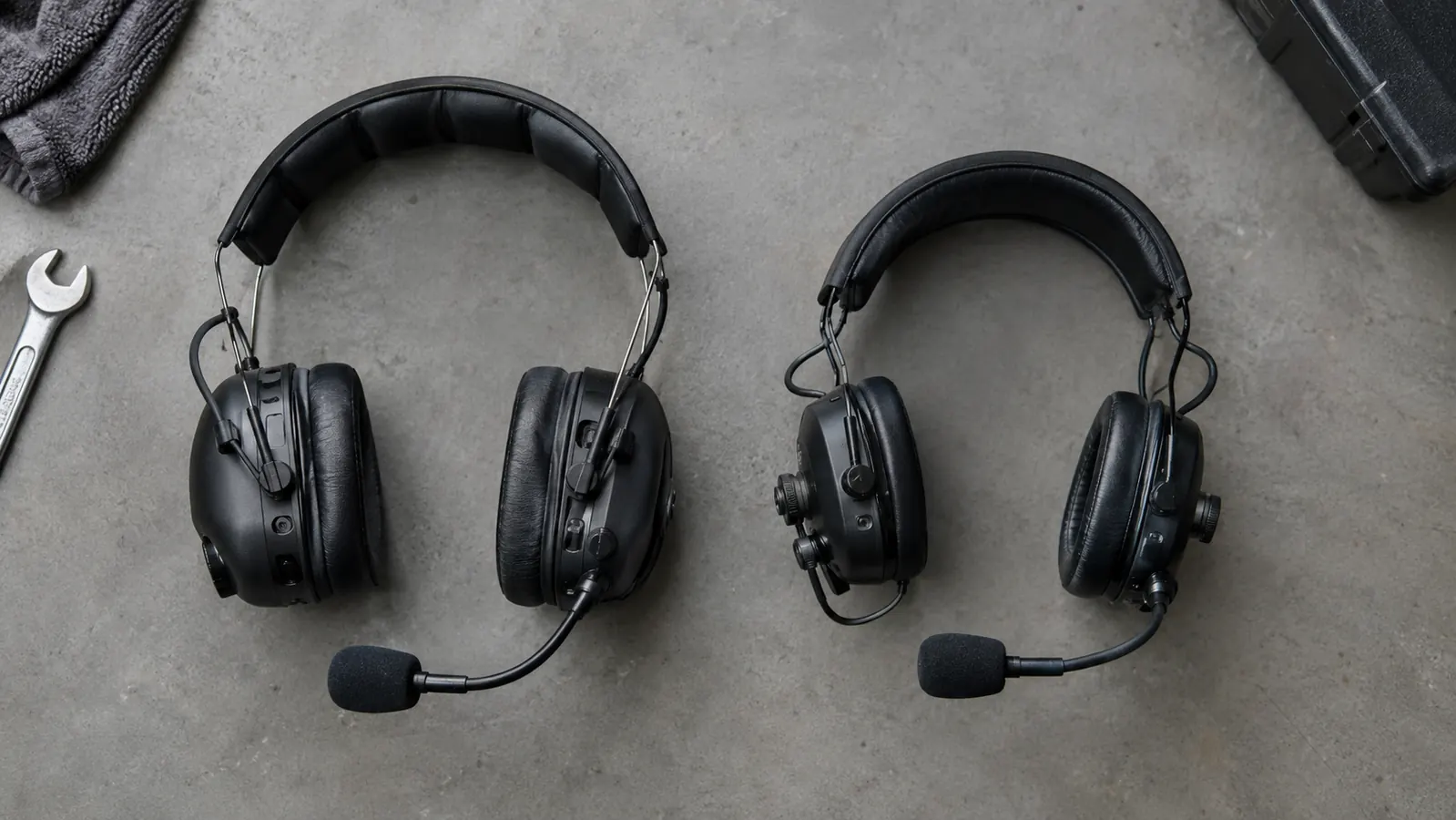
Who Should Buy Which
Buy the Cardo Spirit if you ride at highway speed, ride in the rain, or talk to someone while you ride. That last one is the real test. If you have ever shouted into a headset microphone and heard the person on the other end say "you are breaking up," you already know the budget experience. The Cardo fixes that specific frustration. It is also the better choice if you tour. On my long weekend trip, four days and about nine hundred miles, the Cardo never missed a beat. It survived heat, wind, a rainstorm, and a full day of talk time, and it still had charge left at the end of the day. Carol rode pillion on the canyon loops and we talked the whole way without her having to lean forward and shout. A headset that survives weather and keeps a charge for a full day of riding is a safety item as much as a convenience, because being able to tell your passenger what is happening keeps everyone calmer. I do not use the intercom feature as much as some riders, since Carol is usually right behind me on the pillion seat, but on the highway it is the difference between a ride where she can tell me she needs to stop and a ride where she has to tap my shoulder and hope I guess right. That alone is worth the upgrade. The Cardo also handles the transition between music and a call without the clunky pause-and-resume dance the budget unit does, which sounds minor until you have missed the first five seconds of every call for a month.
Buy the budget headset if you ride mostly under 50 mph, want something for a spare helmet, or are not sure you will use helmet audio enough to justify the cost. It is a fine on-ramp. Just know that the budget unit is a starter tool, not a destination. The month I spent with it reminded me why I stopped buying cheap audio years ago: the cheap stuff works until you need it most, and that is exactly when it lets you down. If you are still deciding, ask yourself one question. Where do you do most of your riding? If the answer involves an interstate, a long day in the saddle, or a passenger who wants to talk, the Cardo is the answer. If the answer is a ten-minute commute on two-lane roads, save the money and start cheap. Whichever you choose, buy from somewhere with a return policy you trust. Helmet audio only proves itself on the road, and the only way to know which one you are is to ride with both. That is what I did, and I have no regrets about the way the month shook out. I also learned that the cheap unit is not a bad gift for a new rider who is still figuring out what they need. It is a good teacher, as long as you treat it as a teacher and not as the final answer.
A communicator that makes the person on the other end say "what?" six times is not a communicator, it is a paperweight with a battery.
Stop shouting into the wind
One ride with the Cardo Spirit and you will wonder why you waited. Clear calls, weatherproof build, and speakers that hold up at speed. Check today's price on Amazon before your next trip.
Amazon Check Today's Price on Amazon →